
In the Spotlight: Morecambe's Black Performers
Rediscover a remarkable chapter in Morecambe’s cultural history, and one that celebrates resilience, talent, and the enduring legacy of Black performers who helped shape the town’s vibrant entertainment scene.
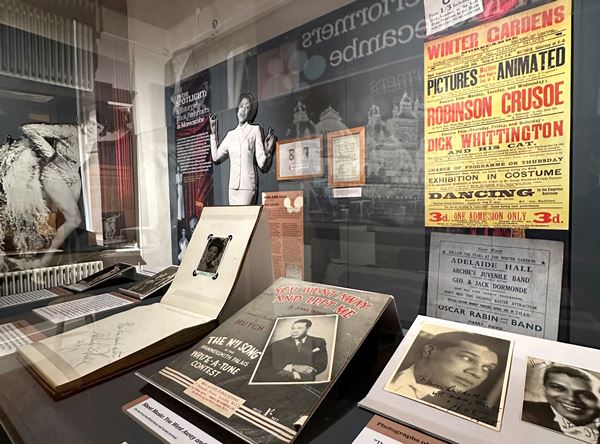
Our 2025 collaborative project In the Spotlight highlighted the dazzling contributions of internationally acclaimed performers who graced Morecambe’s theatres during the late 19th and early 20th century - a time of glamour, sophistication, and vibrant cultural exchange.
The stellar lineup of those who lit up Morecambe’s stages between 1850 and 1950 includes trailblazing stars of the Harlem Renaissance and Cotton Club eras, such as the charismatic Ken ‘Snakehips’ Johnson, the legendary Adelaide Hall, and the beloved James Herns (also known as Jimmy Cooney), who fell so deeply in love with Morecambe that he made it his home.
Their stories have been meticulously researched by Kirsty Roberts, a Lancashire-based Black historian and PhD student at the University of Central Lancashire. The university has a longstanding partnership with Lancaster City Museums and is committed to uncovering and sharing Black histories rooted in the region.
“I’m incredibly excited and honoured to be facilitating the return of these fabulous, internationally acclaimed performance artists to Morecambe. Morecambe was a destination to which Black artists repeatedly returned with enthusiasm for over 100 years and I can’t wait to celebrate this often-overlooked part of the town’s storied history.”
-Kirsty Roberts
This project was made possible by the National Lottery Heritage Fund.
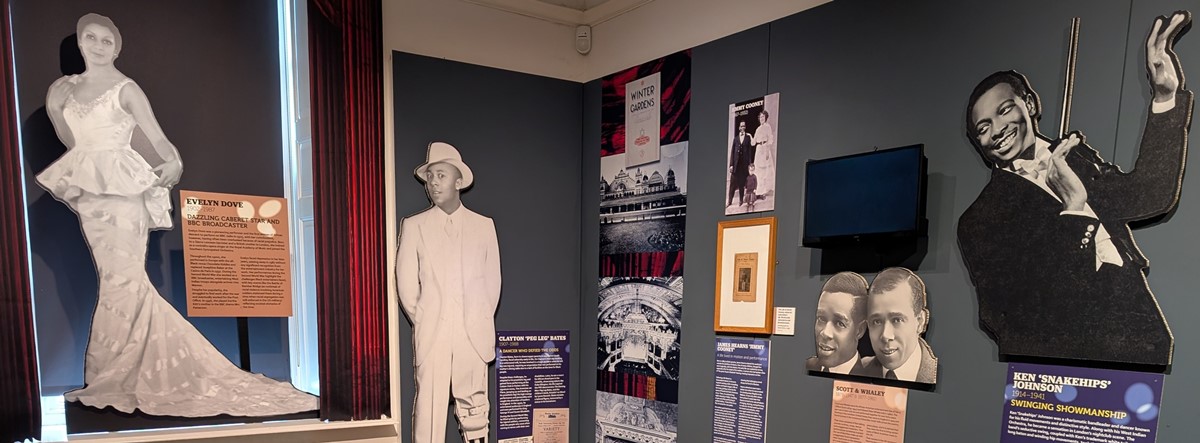
This is a virtual tour of the exhibition which was displayed at Lancaster Maritime Museum during the In the Spotlight project. With 360° imaging, videos and more, this immersive experience faithfully recreates the exhibition online.
Here are the stories of some of the performers featured in the project:
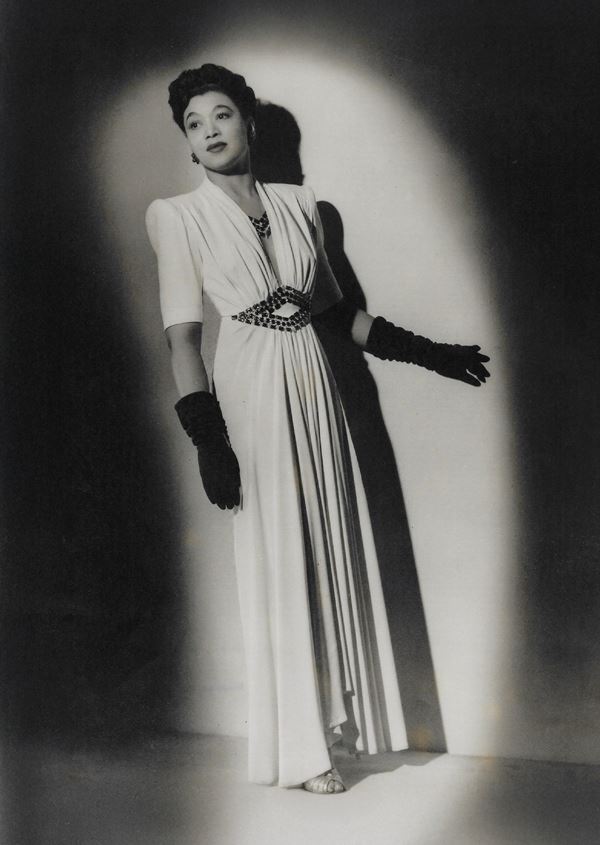
ELISABETH WELCH
1904–2003
ELEGANT WITH UNPARALLELED VOCALS
“I have no technique. No art, no training. Nothing! Just myself. I describe myself as a singer of popular songs.”
Elisabeth Welch, born in America to an interracial couple, moved to London in 1933 to perform in Cole Porter’s Nymph Errant. She toured England, facing a tough reception from British audiences despite her Broadway fame for popularising the Charleston. Elizabeth worked with notable stars of the day and performed at prestigious venues, even entertaining Royals.
Her first performance in Morecambe, at the Winter Gardens in 1940, included hits like ‘Stormy Weather’. During the War years, Elisabeth performed with the Entertainments National Service Association (ENSA) and visited places such as Gibraltar to entertain the military. She also performed in factories and hangars and played a part in raising money for charities such as Orphaned Children and the Stage Door Canteen created by Bing Crosby. During the performances with ENSA she remarked that she often fought back tears.
A recipient of a Lifetime Achievement award and a Tony nomination, Welch continued to innovate in her later years, appearing in West End revues and Derek Jarman’s film of The Tempest (1979), where she sang ‘Stormy Weather’ as a Goddess. She also starred in a special episode of This Is Your Life.
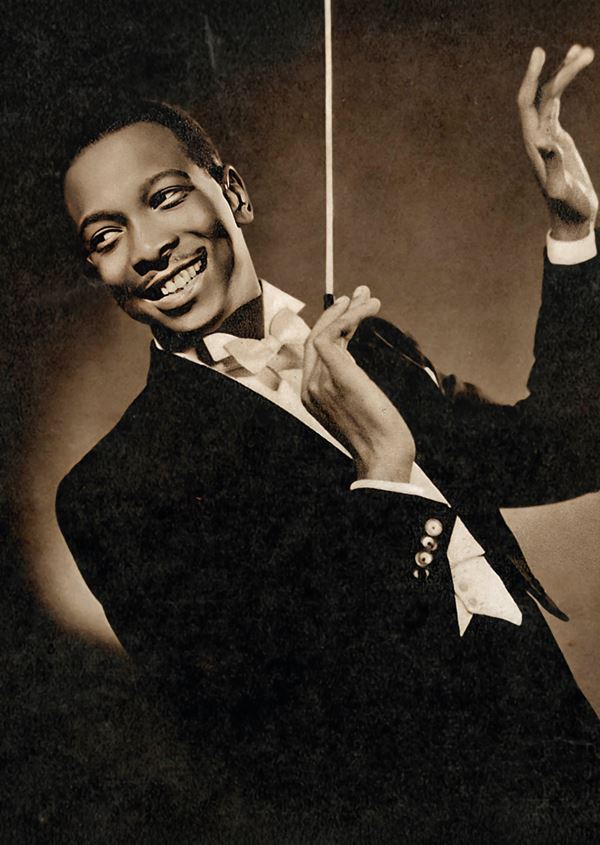
KEN ‘SNAKEHIPS’ JOHNSON
1914–1941
SWINGING SHOWMANSHIP
Ken ‘Snakehips’ Johnson was a charismatic bandleader and dancer known for his fluid movements and distinctive style. Along with his West Indian Orchestra, he became a sensation in London’s nightclub scene. The band’s seductive swing, coupled with Ken’s trademark white tails, extra-long baton and winding hip movements, took them beyond the capital.
Born in British Guiana and raised in England from the age of 14 he left law school at the University of London and travelled to America, where he was inspired by the flamboyant showmanship and attire of performers like Cab Calloway. Unlike many other foreign performers, Ken was not prohibited from joining The Musicians Union when he returned to the UK as a British subject.
In 1940, he toured with the band amid wartime challenges. Ken and the orchestra would have played to mostly white and middle-class audiences in the nightclubs of London. Although it is possible that local Black soldiers stationed in barracks, such as those at Bamber Bridge, may have made day trips to Morecambe, there is very little evidence that Ken’s regional audience was significantly different. His appearance on BBC’s Calling the West Indies was significant for Black audiences in Britain who would rarely get to hear a person from British Guiana (now known as Guyana), in a position of such prominence.
Tragically, Ken died aged only 26 during a Blitz airstrike at the Café de Paris, where he is honoured with a black plaque supplied by the Nubian Jak Community Trust. He was alsothe subject of a 2013 BBC2 Culture show special entitled Swinging into the Blitz, telling the story of his life and death.
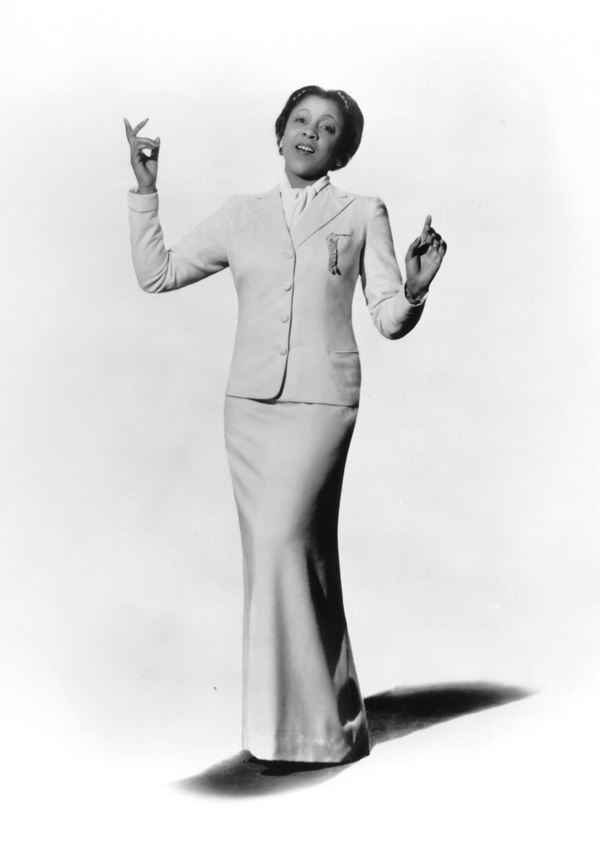
ADELAIDE HALL
1901–1993
JAZZ LEGEND
An early jazz innovator from Brooklyn, Adelaide worked the stage to support her family after her father died, performing on Broadway and touring Europe with the Chocolate Kiddies. She also worked with one of the era’s most celebrated musicians, Duke Ellington. In their song ‘Creole Love Call’, it is believed that Adelaide invented scat singing. She toured the world playing hot spots like the Harlem Opera House, The Cotton Club, and World Fair City.
After relocating to Europe with her husband, Bertram Hicks a Trinidadian seaman, the couple opened La Grosse Pomme nightclub in Paris, attracting patrons such as Josephine Baker. In 1939, as war loomed, they moved to London and took over the Old Florida nightclub. Adelaide was defiant, keeping people entertained in shelters during air raids and famously continuing to perform as bombs fell around. She earned the accolade of being the highest paid female entertainer in Britain, starring in the Oscar-winning film The Thief of Bagdad (1940).
Adelaide performed in Morecambe frequently during the 1940s, and in 1943 she joined Entertainments National Service Association (ENSA), travelling with Allied troops in a jeep; the consummate performer, even in the most terrifying situations. Later that year, her show Wrapped in Velvet made her the first Black artist to have a long-term contract with the BBC and the first Black woman to perform at the Royal Variety Show.
Adelaide’s career had many highlights. She worked solidly for decades, dedicating her life to entertainment and her fans. She held a Guinness World Record for being the World’s Most Enduring Recording Artiste, and in June 2020 British Vogue named Adelaide Hall in their list of Seven Remarkable Black Women Who Shaped British History. Adelaide’s special connection to Morecambe runs deeper still: it is said that during one of her stays it was her husband Bertram Hicks, a Trinidadian seaman, who was the first to suggest to the young comedic performer Eric Bartholomew that he should adopt his hometown for his stage name. A wise move indeed!
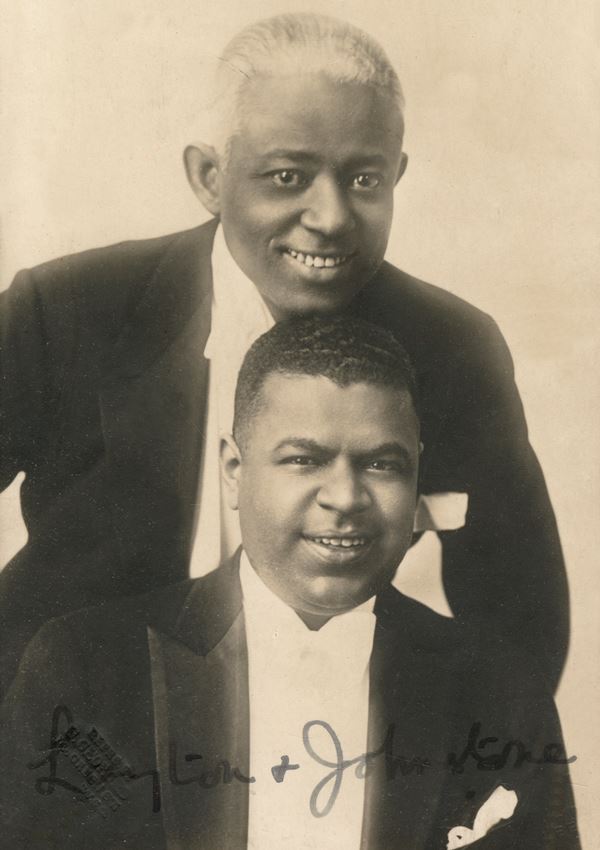
LAYTON & JOHNSTONE
CREATIVE PARTNERSHIP
Layton and Johnstone had success as solo artists (Layton wrote music for Al Jolson and Sophie Tucker) before they decided to work together, collaborating from 1922. They performed for high-profile families from the Gilded Age, then set their sights on England.
The theatrical touring circuit here was not just limited to the capital, with many provincial towns and cities offering a vibrant entertainment scene. With sales of ten million records and audiences that included the royal family, Layton and Johnstone’s show came to Morecambe during the 1930s and played the Winter Gardens on their farewell tour. The partnership dissolved following Johnstone’s relationship with a married white woman; they eventually married, but he ended his days bankrupt and unable to restart his entertainment career.
Layton continued to enjoy a very fruitful career, performing for the troops during the Second World War and making appearances on the silver screen as well as multiple stage appearances throughout the 1930s in Morecambe. Layton and Johnstone’s music has an enduring quality, commonly used by modern soundscape artists.
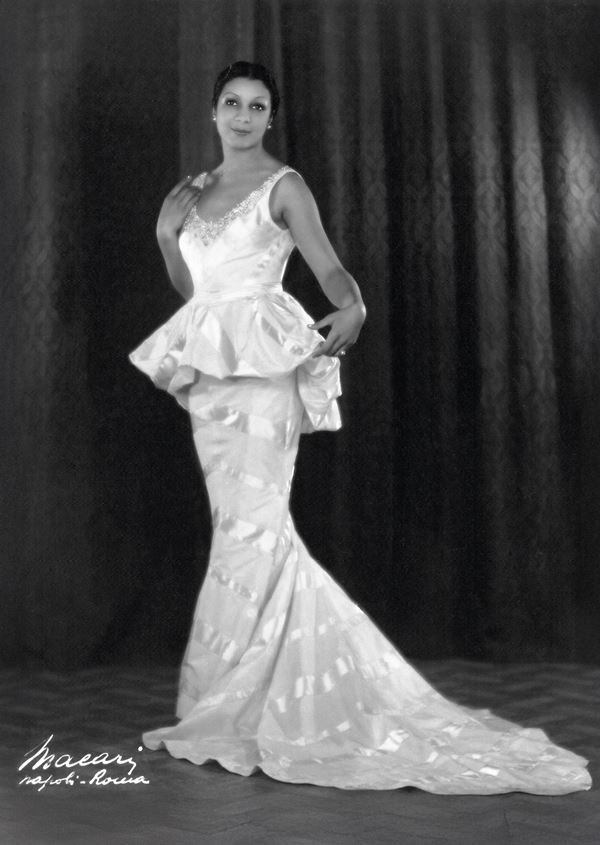
EVELYN DOVE
1902–1987
DAZZLING CABERET STAR AND BBC BROADCASTER
Evelyn Dove was a pioneering performer and the first woman of African descent to perform on BBC radio in 1925, with her contributions, however, having often been overlooked because of racial prejudice. Born to a Sierra Leonean barrister and a British mother in London, she trained as a contralto opera singer at the Royal Academy of Music and joined the Southern Syncopated Orchestra.
Throughout the 1920s, she performed in Europe with the all-Black revue Chocolate Kiddies and replaced Josephine Baker at the Casino de Paris in 1932. During the Second World War she worked as a BBC broadcaster, entertaining West Indian troops alongside activist Una Marson.
Despite her popularity, she struggled to find work after the war and eventually worked for the Post Office. In 1956, she played Eartha Kitt’s mother in the BBC drama Mrs Patterson. Evelyn faced depression in her later years, passing away in 1987 without any significant recognition from the entertainment industry for her work. Her performances during the Second World War highlight the challenges Black entertainers faced, with key events like the Battle of Bamber Bridge (an outbreak of racial violence involving American soldiers stationed there during a time when racial segregation was still enforced in the US military) reflecting societal obstacles of the time.
CLAYTON ‘PEG LEG’ BATES
1907–1988
A DANCER WHO DEFIED THE ODDS
Clayton Bates, born to sharecropper parents in segregated South Carolina, faced adversity early in life. On Clayton’s third day working in a cottonseed mill, he was involved in a tragic accident when his left leg was injured, requiring an amputation that was performed on his mother’s dining table due to a lack of facilities at the time for Black people.
Despite these challenges, he adapted to his prosthetic leg and gained fame performing at the Cotton Club in Harlem with his signature move, The American Jet Plane, jumping up and landing on his prosthetic leg! His high-energy performance and personality soon caught the attention of bookers in England. In the 1930s, he entertained audiences in England and even performed for King George VI and Queen Elizabeth.
During the Second World War, he lifted spirits by performing for injured soldiers, connecting with the people who were often coming to terms with their own disabilities. Later, he ran a resort for African Americans in the Catskills, showcasing talents like Duke Ellington. His life inspired the PBS documentary The Dancing Man: Peg Leg Bates, and the children’s book, Knockin’ on Wood by Lynne Barasch. Bates remains a beloved figure, honoured by a statue in his hometown.
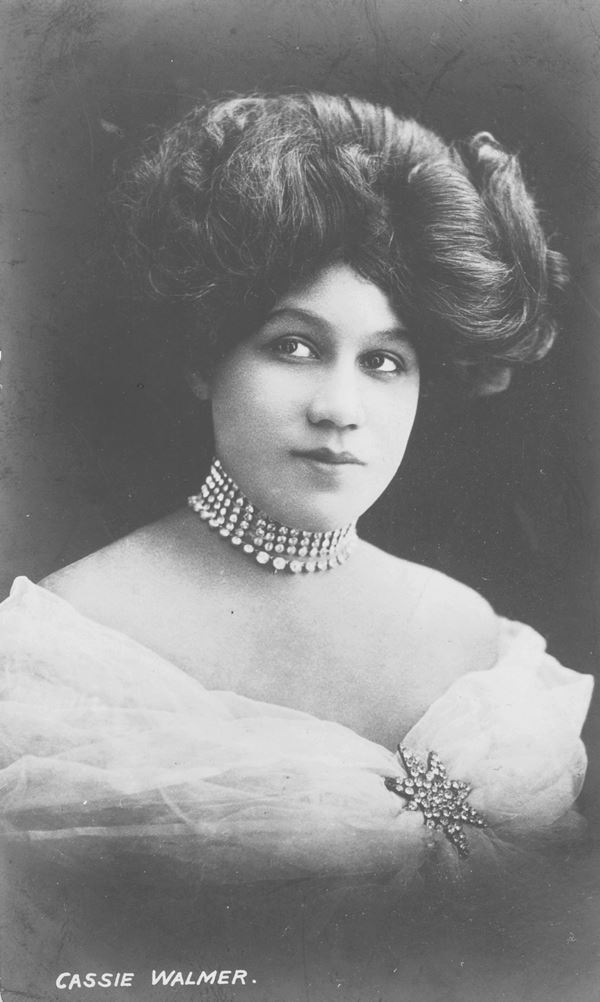
CASSIE WALMER
1888–1980
CHILD PERFORMER TO GLOBAL SUCCESS
Cassandra Walmer was born in London. Her parents had some experience in the entertainment industry as her father, George C. Walmer was an African American actor and musician. Her father’s career led to Cassie starting to act at a very young age. Her father died in 1897, but Cassie continued to work in the entertainment industry, focusing on singing and dancing.
She made her solo debut in 1900, aged just 12 years old. By the time she was 19 she had completed successful tours of music halls around the UK, Australia and New Zealand. Cassie married in 1913 and continued to tour the world. After the First World War she took on the stage name Janice Hart and became part of a duo with a dancer and comedian called Frank O’Brian. Together the pair created several review shows which showcased their wide range of dancing, singing, comedic and acrobatic
skills. Eventually, after the death of Cassie’s first husband the pair married in 1949. Cassie continued to perform until the early 1950s, and her wideranging career included both stage and radio performances. Cassie died at the age of 92 in 1980. She is remembered for her voice, her versatility, and her eye-catching costumes, which she designed herself.
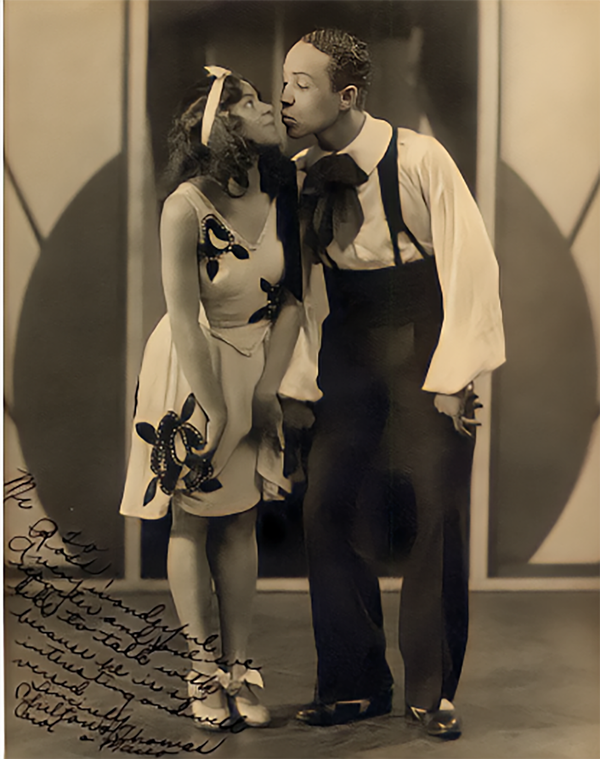
CHILTON & THOMAS
1907–1996 & 1906– ....
INNOVATIVE DANCING DUO
Dancing duo Chilton and Thomas were Carol Chilton, born in Chicago in 1907 and Maceo Thomas, from Birmingham, Alabama, born 1906. It is known that Chilton began performing as a dancer in her teens, but not much is known about the early life of Maceo Thomas. By 1927 the pair had met and had begun touring as a duo renowned for quick and elegant dancing. One newspaper from 1928 declared ‘We frankly state that Chilton and Thomas, who conceived their own routine and steps, showed us the best dancing we have ever seen in Vaudeville and, with a bare exception or two, the best we have ever seen anywhere’.
In the 1930s they began to appear in Hollywood films and also embarked on a number of international tours including four to England between 1930 and 1937. In August 1936 they appeared in the first ever live TV entertainment show, created by the BBC. The broadcast featured some of the biggest entertainers of the theatre and music hall scene and featured Chilton and Thomas doing one of their tap-dancing routines. T
he pair had become romantic partners and had married in 1927, but the marriage ended in divorce in the early 1940s, the same time that the pair stopped dancing. Not much is known about Thomas’ life after they went their separate ways, but both appear to have stopped performing completely soon afterwards. Carol Chilton remarried in 1943 and lived to age the of 88, dying, back in Chicago, in 1996.
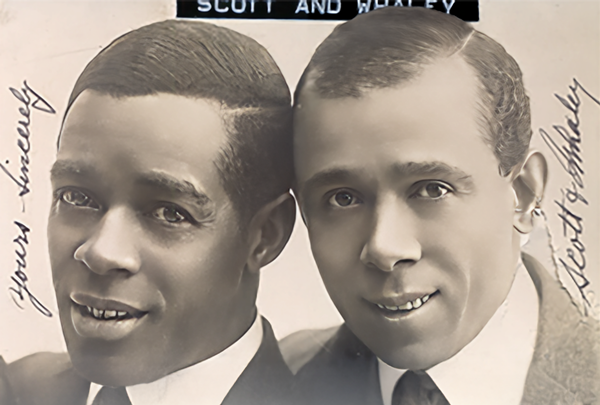
SCOTT & WHALEY
1879–1947 & 1877–1960
GROUND BREAKING MUSICIANS & COMEDIANS
Scott and Whaley were the African-American entertainment duo of Harry Clifford Scott (1879 – 1947) and Edward Peter Whaley (1877 – 1960). The pair met in their mid-20s and performed together for over forty years. Starting in the northern United States they came to England in 1909 and found success in the numerous Edwardian music halls across the country.
Their show consisted of fast-talking comedy routines, songs, dances and exaggerated characters. Their performances sometimes included the use of blackface make-up with exaggerated facial expressions when Scott took on the character of a rural simpleton, contrasting with Whalley’s ‘straight man’ persona. It says much for the time that they felt that they needed to conform to such portrayals, which played on the racist beliefs and misconceptions that were prevalent in vaudeville and music hall acts. Scott was also an accomplished piano player, and it is claimed that they were the fi rst to bring certain types of Black American music to the UK.
Their success in the UK convinced them to stay and they both eventually became citizens. They performed on a long running BBC radio show and became the first Black performers to star in a British film in 1938. The pair’s career ended in 1946, just one year before Scott died at the age of 67. Whaley continued to perform occasionally until he died in 1960.
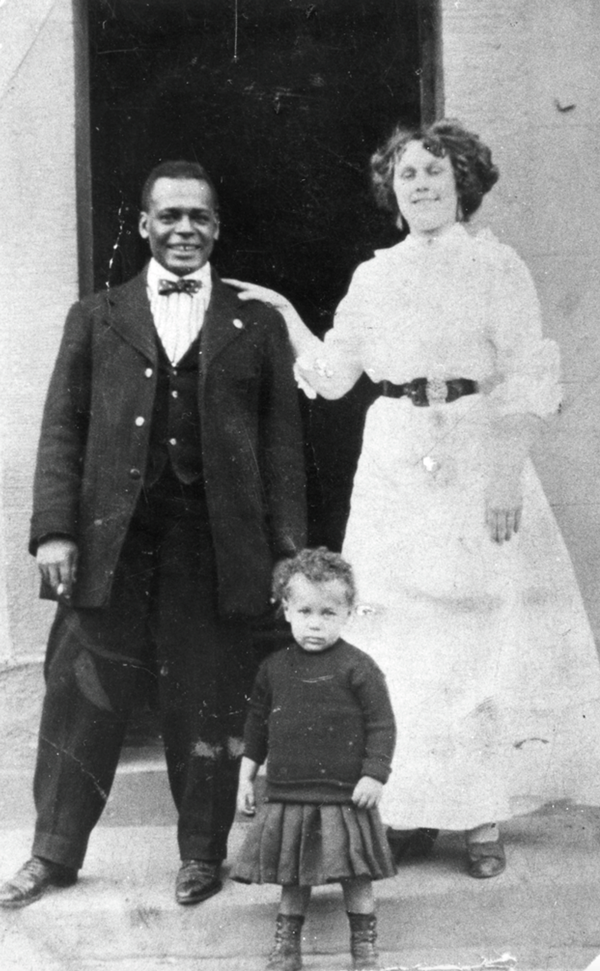
JAMES HEARNS, ‘JIMMY COONEY’
1865 - 1932
A LIFE LIVED IN MOTION AND PERFORMANCE
Born in 1865 to black parents, James Hearns entered the world just outside the abolition of slavery. He had six siblings, four of whom were tragically, sold into slavery. His early life was marked by sorrow, especially after the death of his mother when James was only 10. She was a woman who had spoken often of ‘the great Queen Elizabeth’, leaving a lasting impression in James’ memory. Growing up on a plantation, James ran errands and delivered messages to survive.
When he was 12, he met an Irishman named Moore who offered to take him to Ireland. There he lived as a servant for four years before becoming inspired by working under a travelling master, and running away to join the Powell and Clark American Circus. But life with a travelling circus was hard. James endured long nights sleeping in fields, travelling at 3am and often performing in soaked clothes. Tired of the circus life, he looked for new paths, and stowed away on a ship heading across to Liverpool.
He was young, without a home or family. At this point in his life, he began a chequered career as a sailor, a clown, a waiter, and tried to pass himself off as a boxer. His restless spirit led him to Calgari, San Francisco, Spain, Russia, and Sierra Leone. Interestingly, he described feeling like a foreigner when in Sierra Leone. Despite their shared skin colour, his company and manner of speaking set him apart from Africans, showing that belonging cannot always be found in likeness.
Hearns' adventure soon took a darker turn when he was arrested for stowing away illegally to the Maltese islands. It was only after release from prison 6 weeks later that Hearns turned to his natural talents of singing, dancing, and performing to make do. He had saved £40 from his travels and odd jobs when once again misfortune struck, when the money was stolen. This spiralled him into homelessness and depression, and he came close to ending his life. At his lowest, he was saved and strengthened by a gentleman simply giving him as shilling and wishing him ‘good luck’. Hearns moved on to find other jobs and ways of working wherever he could find it.
James arrived in Morecambe while traveling around Europe, entertaining in music halls. In the early 20th century Morecambe was exceptional, if not unique, in having its beach entertainment include Black men. James was a member of the No.1 Troupe, along with William Poe Smith, a Jamaican, and Charles Binney Foster, who was from Africa's Gold Coast. Despite being a man with wanderlust in his veins, James decided to settle in Morecambe in the early 1900s, marrying and having a family. It was here that he became a local celebrity, working as a commissionaire outside the Royalty Theatre.
James's memorial is in Torrisholme Cemetery and reads:
THIS MEMORIAL ERECTED BY HIS SON & DAUGHTER GREATLY ASSISTED BY PUBLIC SUBSCRIPTION TO THE MEMORY OF JAMES HERNS, (JAMES COONEY) DIED 5TH MARCH 1932, AGED 67 YEARS. ALSO HIS DEAR WIFE EMILY, DIED 5TH SEPTEMBER 1926, AGED 52 YEARS.
BORN UNDER SOUTHERN SKIES, SAILED THE SEVEN SEAS, "AT ANCHOR" IN THE TOWN HE LOVED.
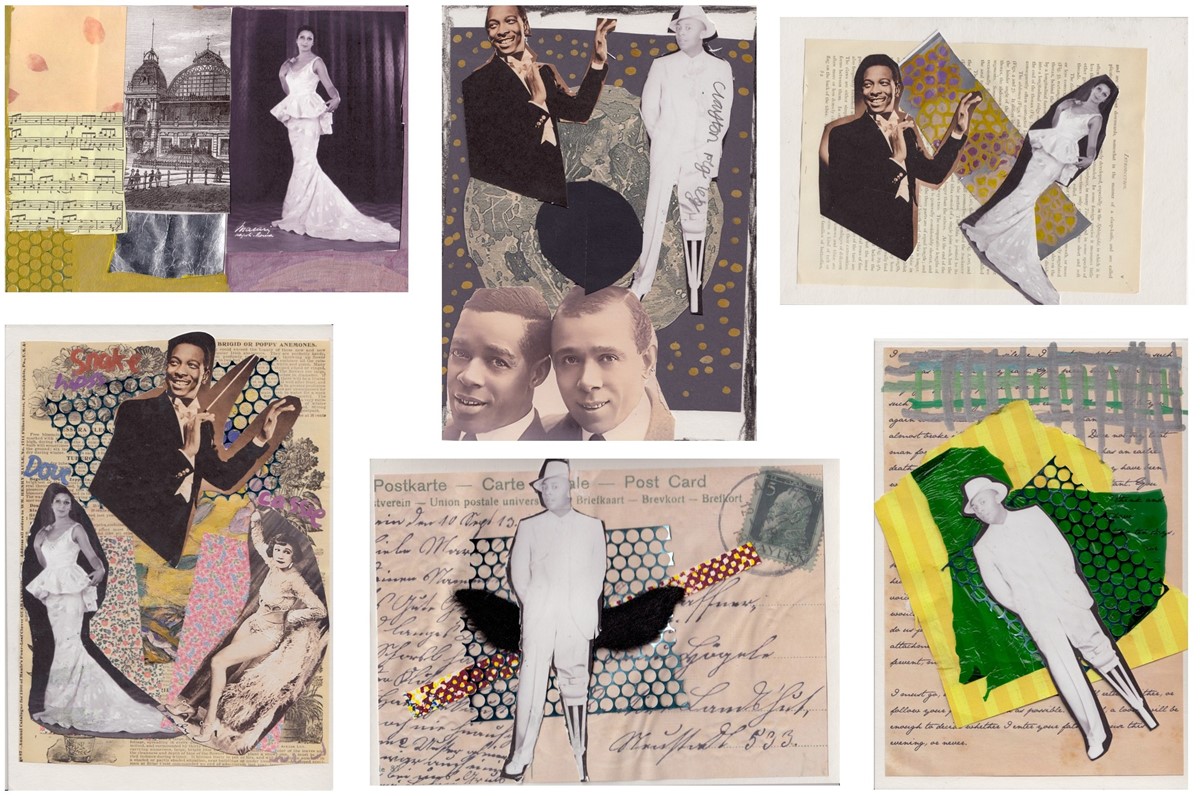
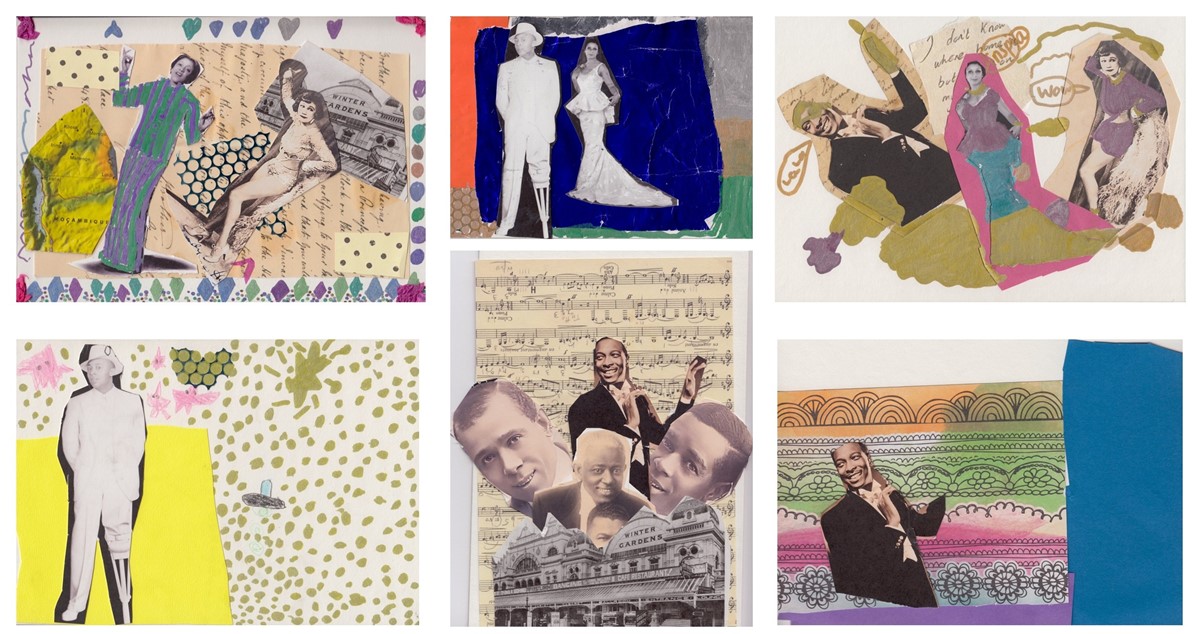
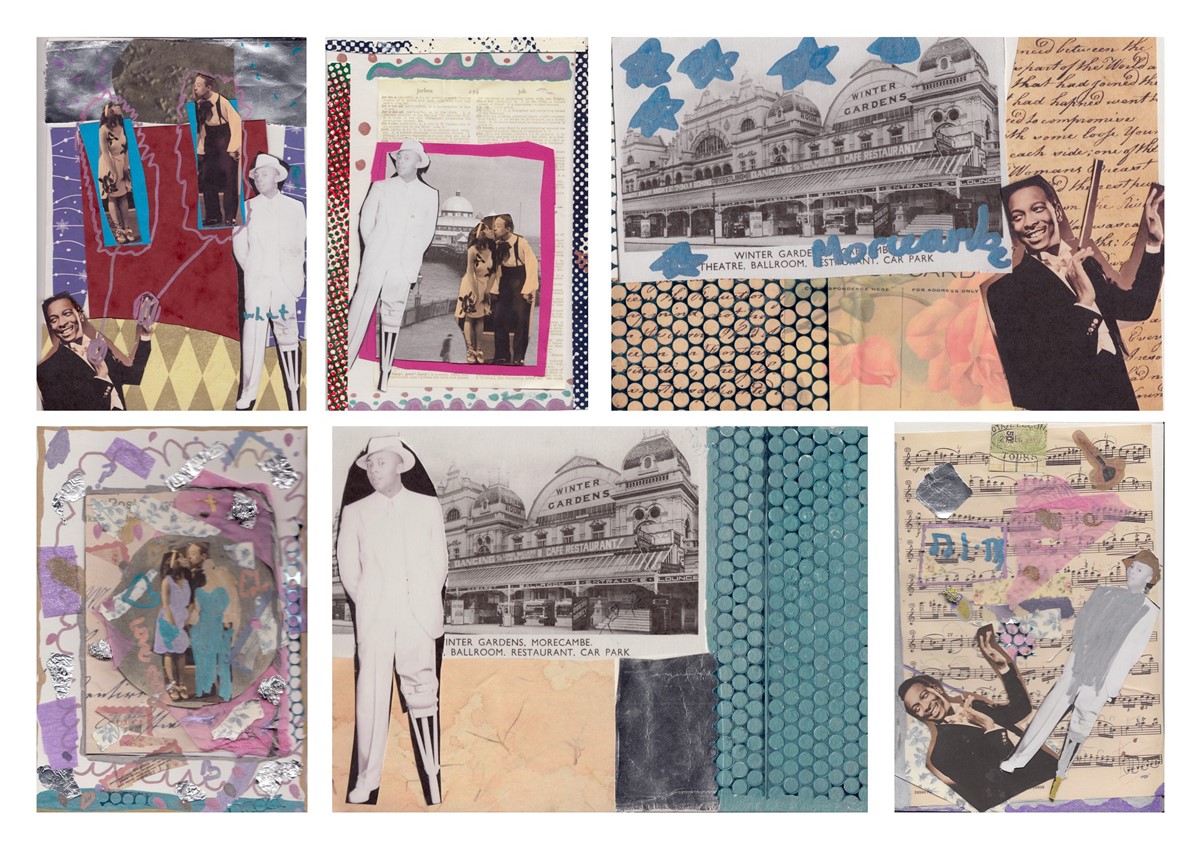
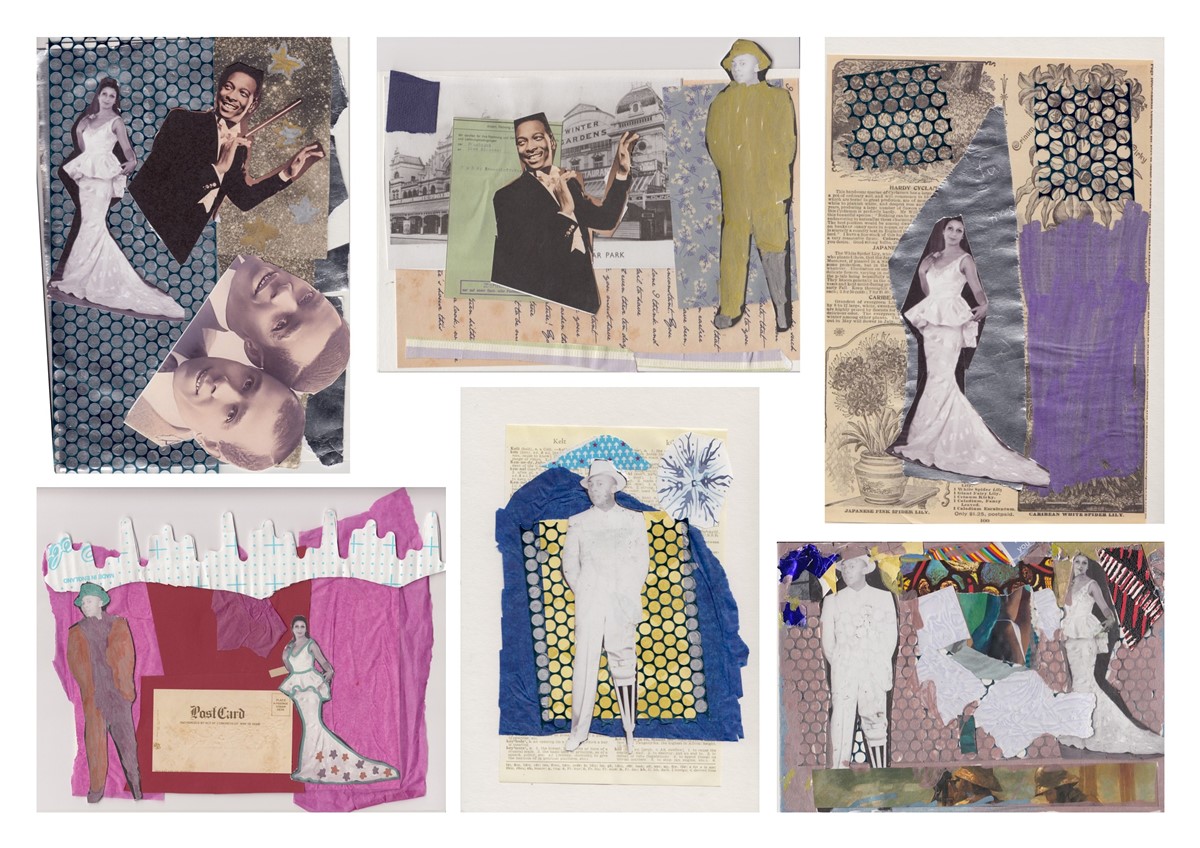
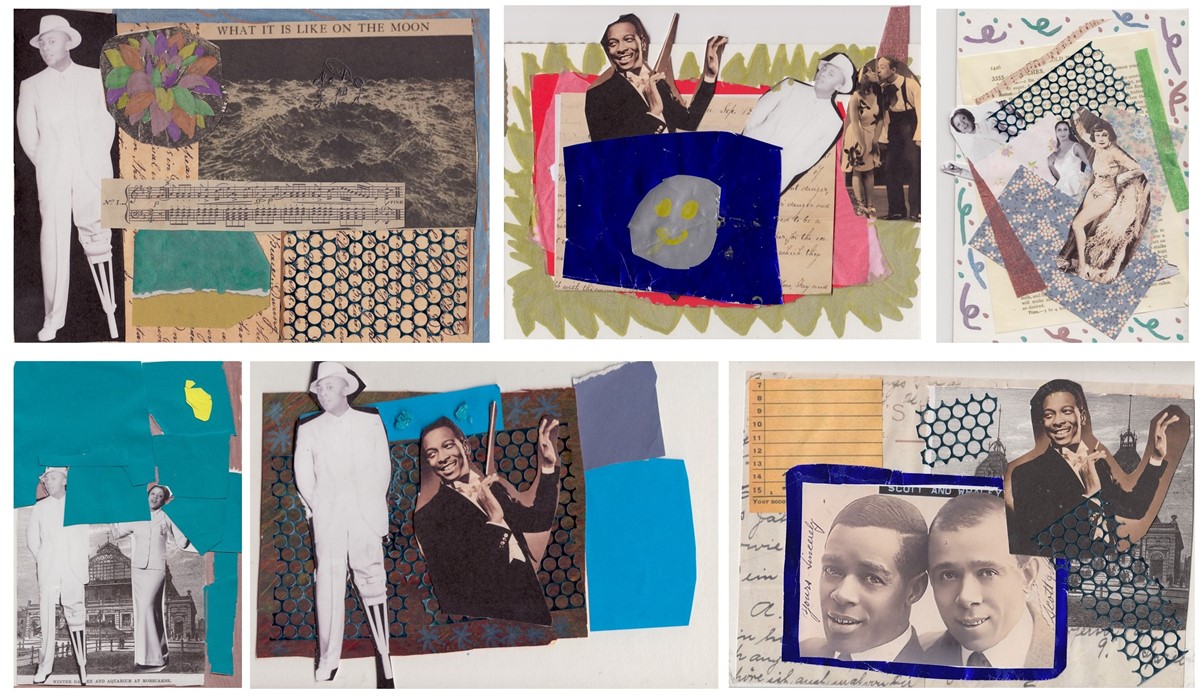
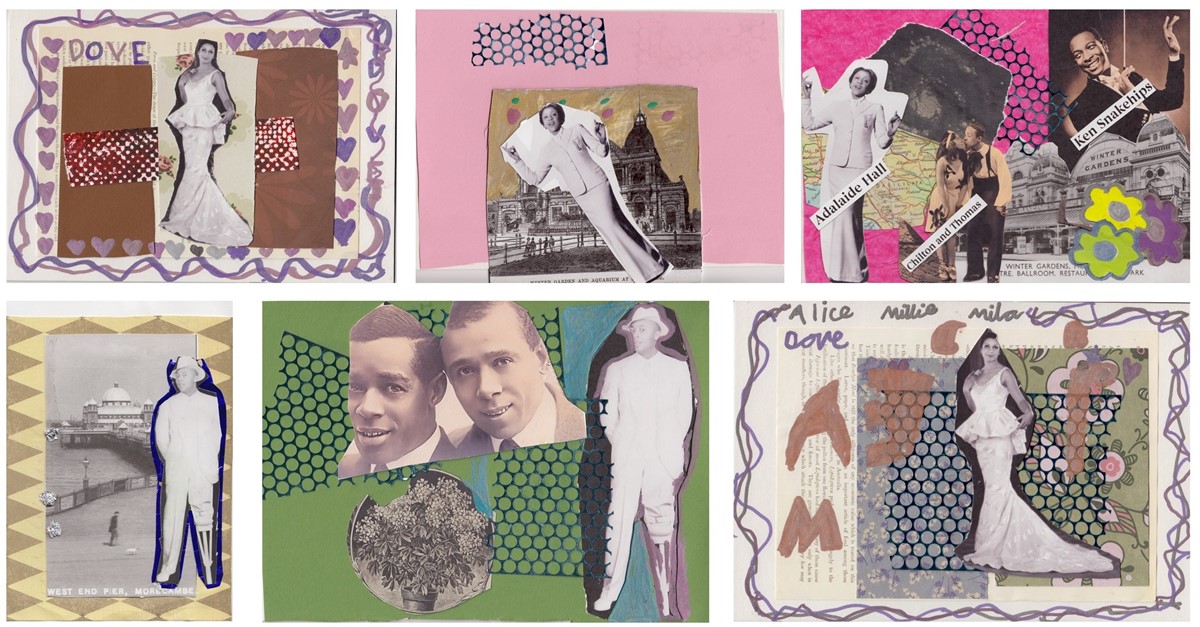
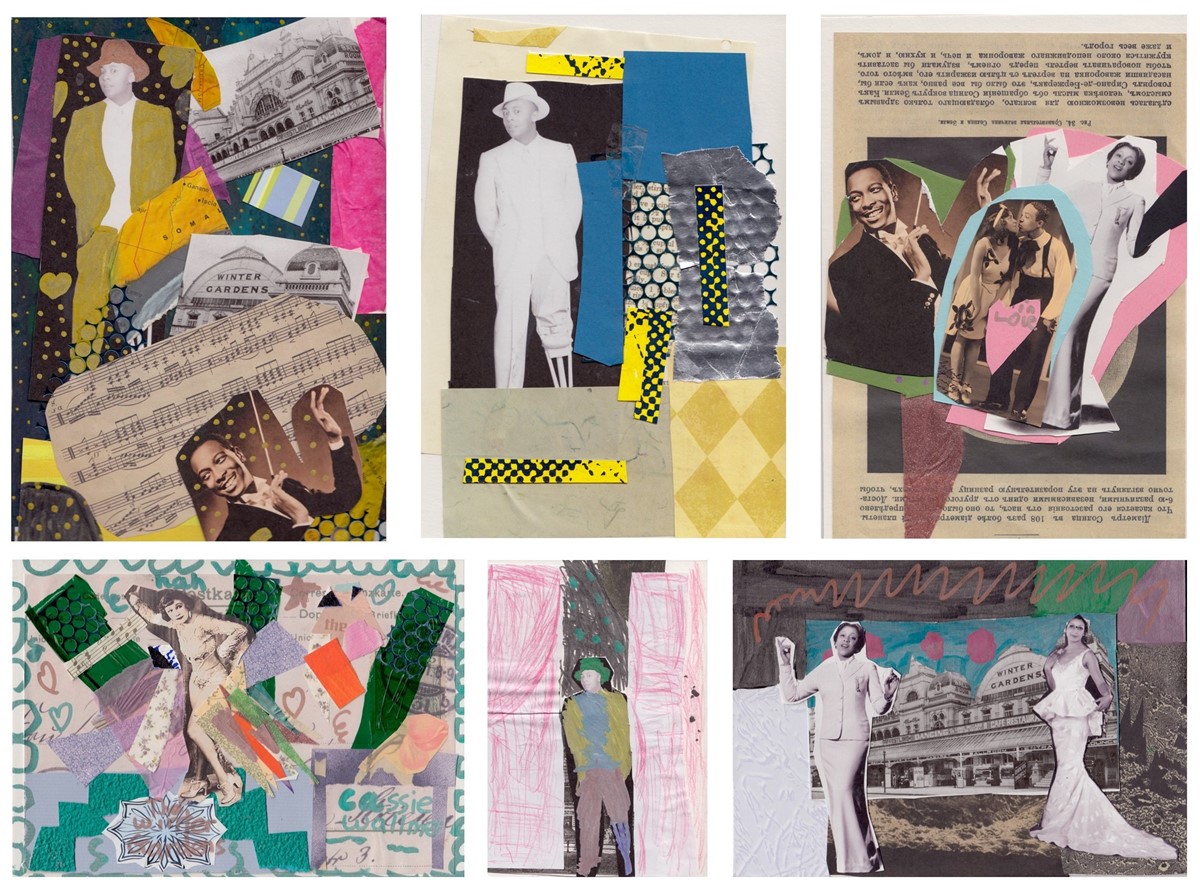
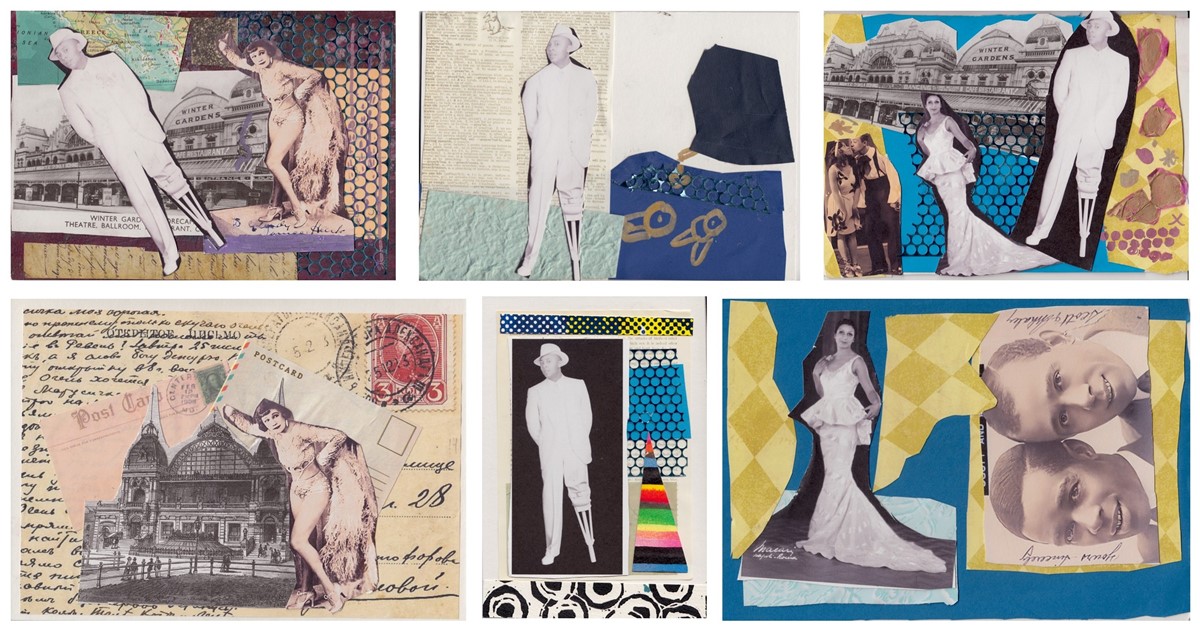
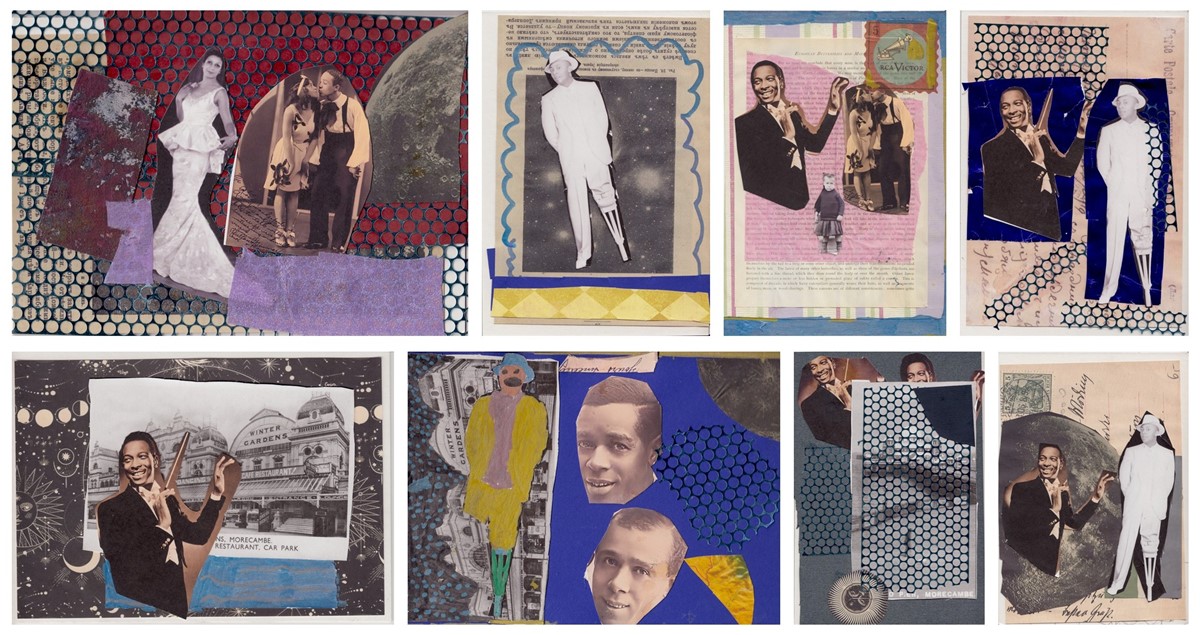
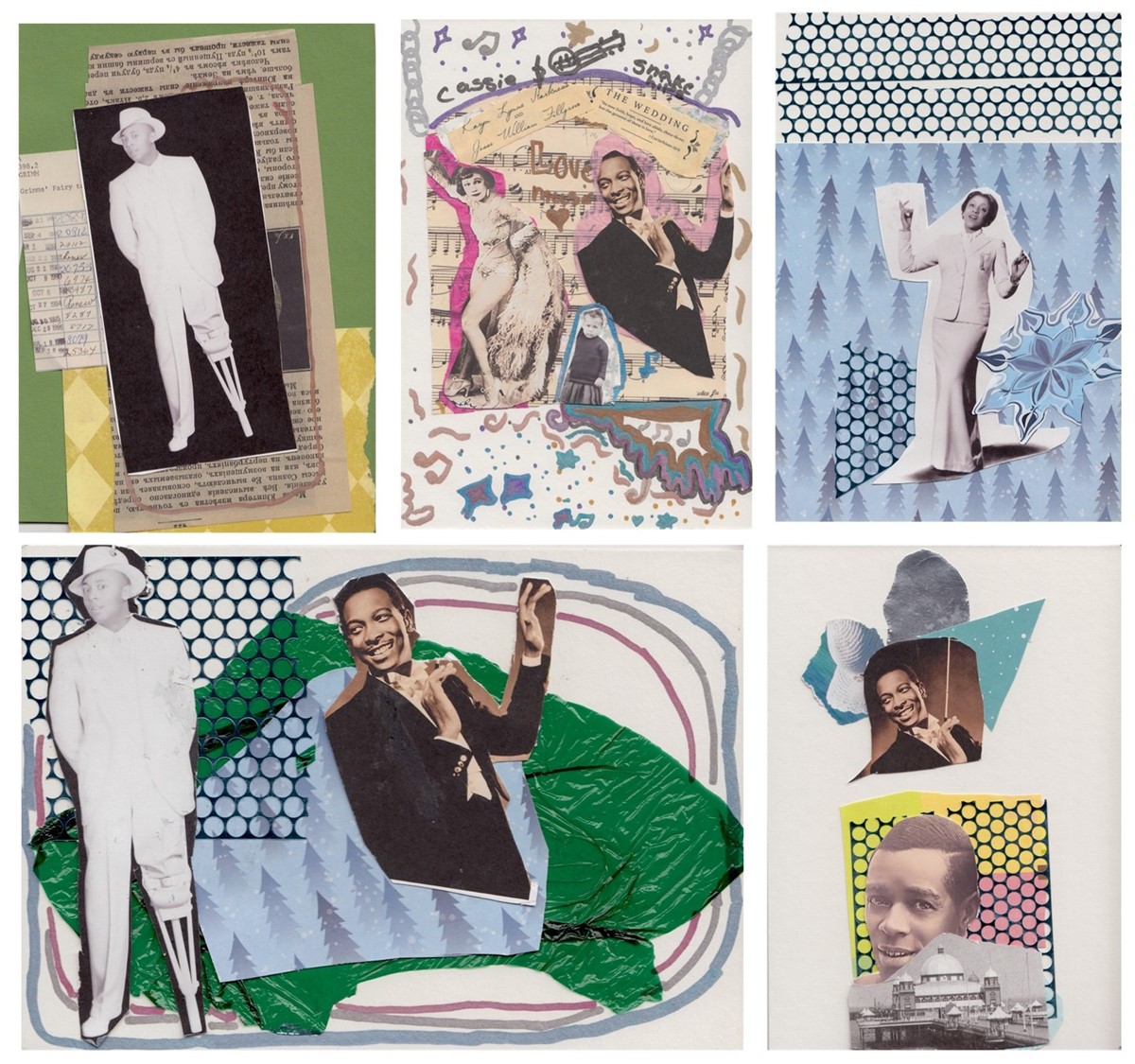
Another aspect of In the Spotlight involved Kendal based award winning artist Lela Harris working with pupils from Great Wood School in Bare to imagine posters and postcards promoting the performers featured in the project. Here are the results!

This project was made possible by the National Lottery Heritage Fund.

