
Abyssinia Project
Addressing the colonial era legacy of the King's Own Royal Regiment and researching cultural objects related to the 1868 Abyssinian campaign.
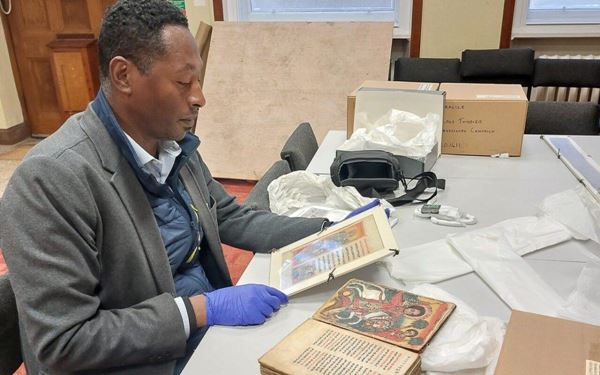
In 2022 the Museums were instrumental in securing £53,000 (see Project Funding below) for the King’s Own Royal Regiment Museum Trustees to undertake the Abyssinia Project, exploring the colonial era legacy of the 1868 campaign and the objects in their collection. Eyob Derillo, an Ethiopian expert from the British Library, was appointed as the Project Officer, and the project has attracted significant international interest.
The King’s Own collection includes objects taken during the 19th-century campaign in Abyssinia, now Ethiopia. Many of these objects may have a deep cultural significance for the modern nation. As an Abyssinian specialist and author of histories of magic, Eyob Derillo's expertise has been essential in researching the objects in the collection relating to the Campaign, both from the Abyssinian (Ethiopian) and British sides.
The project has also involved work with source communities such as the Ethiopian community within Britain, the National Museum of Ethiopia, and the Regimental family, as well as local students and volunteers. The work is particularly relevant today as there have been calls from Ethiopia to return looted objects that are considered sacred by those involved in the Ethiopian Orthodox Church.
The King’s Own Museum wants to tell the stories not only of the regiment’s soldiers but also their “adversaries”, who they met on the battlefield. This project has allowed us to work in partnership with stakeholders from Ethiopia to develop a fully rounded perspective on what was a truly extraordinary event, the 1868 invasion of Abyssinia by British forces to secure the release of hostages.
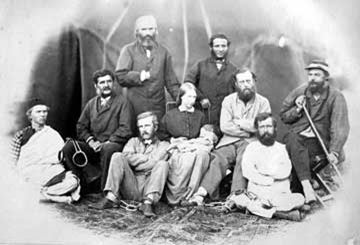
In the 19th century, the British government often employed its military strength to settle its disputes with foreign powers. In this case, the army was called upon to free several Europeans who were being held captive in Abyssinia. The King’s Own was one of three regiments to serve in this campaign.
On arrival from India, the King’s Own marched many hundreds of miles inland to the fortress of Magdala. The Abyssinians were defeated during the Battle of Arogie, and the fortress was stormed a few days later. The conflict resulted in the sacking of the fortress of Magdala, the death of Emperor Tewodros II, and the subsequent auction of items from the fortress/palace.
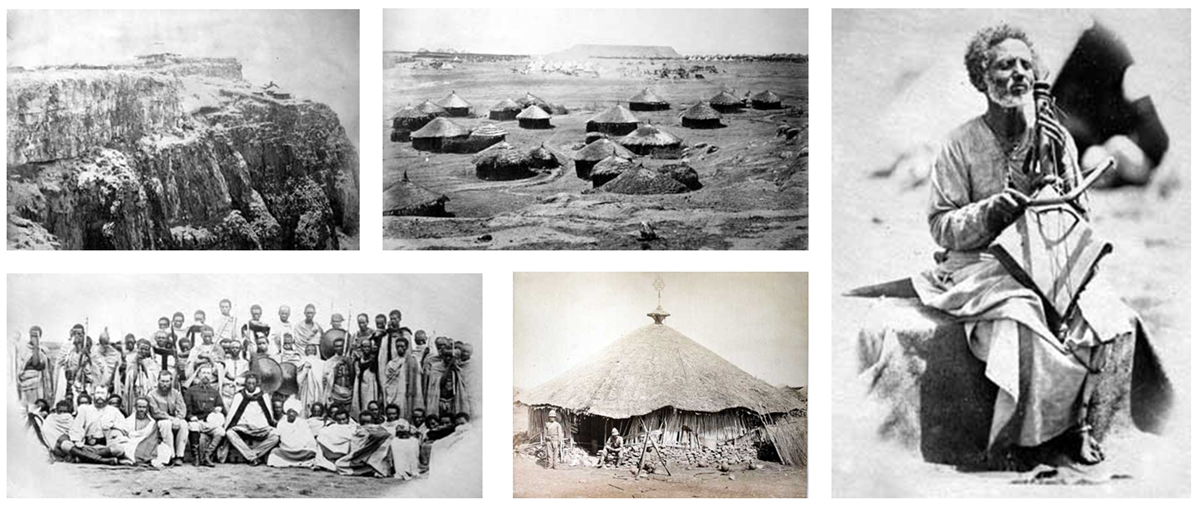
Below - photos from the collection, clockwise from top left:
- Exterior and interior of Magdala fortress.
- Abyssinian Fiddler.
- The Church of Madhane Alam, dedicated to the Saviour of the World.
- Kassa's Prime Minister and followers.
Museum Displays
The Abyssinian Campaign section of the King's Own Royal Regiment Museum has been fully reinterpreted and redisplayed as a result of the project. Artefacts from both sides of the conflict are accompanied by brand new information panels, and we will soon be adding an interactive touchscreen with photographs, maps and other detailed information about the campaign.
The text of the main information panels is reproduced here, and you can read more about the collection objects in the following section.
British Expedition to Abyssinia (1868)
Led by Lieutenant General Sir Robert Napier, around 12,000 British and Indian soldiers marched through rugged mountains and valleys to reach the fortress of Magdala መቅደላ. Their aim was to free the hostages taken by the Emperor Tewodros II. Their journey, covering 400 miles over tough terrain, was one of the most challenging missions ever for the British Army.
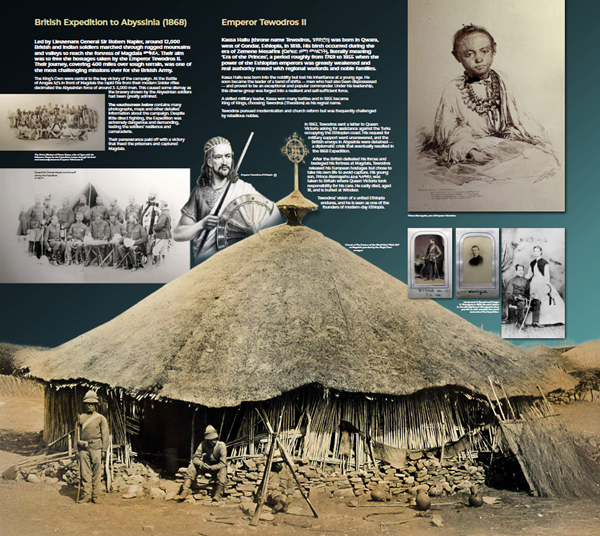
The King’s Own were central to the key victory of the campaign. At the Battle of Arogee እሮጌ in front of Magdala the rapid fire from their modern Snider rifles decimated the Abyssinian force of around 3–5,000 men. This caused some dismay as the bravery shown by the Abyssinian soldiers had been greatly admired.
Despite little direct fighting, the Expedition was extremely dangerous and demanding, testing the soldiers’ resilience and camaraderie. Their perseverance paid off with a victory that freed the prisoners and captured Magdala.
Emperor Tewodros II
Kassa Hailu (throne name Tewodros, ቴዎድሮስ) was born in Qwara, west of Gondar, Ethiopia, in 1818. His birth occurred during the era of Zemene Mesafint (Ge’ez: ዘመነ መሳፍንት), literally meaning ‘Era of the Princes’, a period roughly from 1769 to 1855 when the power of the Ethiopian emperors was greatly weakened and real authority rested with regional warlords and noble families.
Kassa Hailu was born into the nobility but lost his inheritance at a young age. He soon became the leader of a band of shifta — men who had also been dispossessed — and proved to be an exceptional and popular commander. Under his leadership, this diverse group was forged into a resilient and self-sufficient force. A skilled military leader, Kassa won many battles and in 1855 became King of Kings, choosing Tewodros (Theodore) as his regnal name. Tewodros pursued modernization and church reform but was frequently challenged by rebellious nobles.
In 1862, Tewodros sent a letter to Queen Victoria asking for assistance against the Turks occupying the Ethiopian coast. His request for military support went unanswered, and the British envoys in Abyssinia were detained — a diplomatic crisis that eventually resulted in the 1868 Expedition.
After the British defeated his forces and besieged his fortress at Magdala, Tewodros released his European hostages but chose to take his own life to avoid capture. His young son, Prince Alemayehu ልዑል ዓለማየሁ, was taken to Britain where Queen Victoria took responsibility for his care. He sadly died, aged 18, and is buried at Windsor. Tewodros’ vision of a united Ethiopia endures, and he is seen as one of the founders of modern-day Ethiopia.
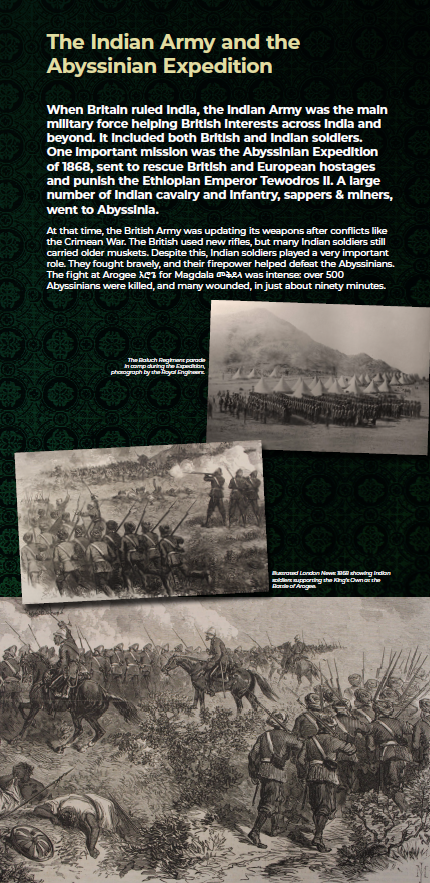
The Indian Army and the Abyssinian Expedition
When Britain ruled India, the Indian Army was the main military force helping British interests across India and beyond. It included both British and Indian soldiers. One important mission was the Abyssinian Expedition of 1868, sent to rescue British and European hostages and punish the Ethiopian Emperor Tewodros II. A large number of Indian cavalry and infantry, sappers & miners, went to Abyssinia.
At that time, the British Army was updating its weapons after conflicts like the Crimean War. The British used new rifles, but many Indian soldiers still carried older muskets. Despite this, Indian soldiers played a very important role. They fought bravely, and their firepower helped defeat the Abyssinians. The fight at Arogee አሮጌ for Magdala መቅደላ was intense: over 500 Abyssinians were killed, and many wounded, in just about ninety minutes.
After the Fall of Magdala መቅደላ
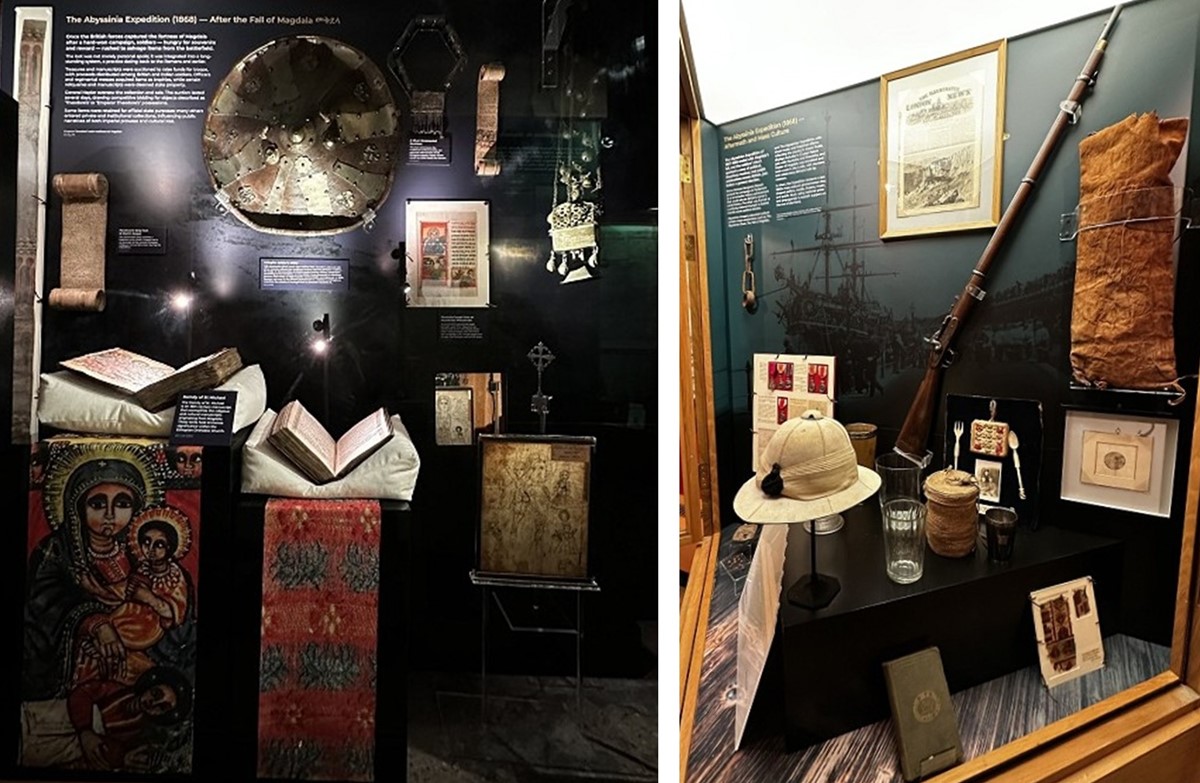
Once the British forces captured the fortress of Magdala after a hard-won campaign, soldiers — hungry for souvenirs and reward — rushed to salvage items from the battlefield.
The loot was not merely personal spoils; it was integrated into a longstanding system, a practice dating back to the Romans and earlier.
Treasures and manuscripts were auctioned to raise funds for troops, with proceeds distributed among British and Indian soldiers. Officers and regimental messes acquired items as trophies, while certain reliquaries and manuscripts were deemed state property.
General Napier oversaw the collection and sale. The auction lasted several days, drawing competitive bidding for objects described as ‘Theodore’s’ or ‘Emperor Theodore’s’ possessions.
Some items were retained for official state purposes; many others entered private and institutional collections, influencing public narratives of both imperial prowess and cultural loss.
Aftermath and Mass Culture
The Abyssinian Expedition of 1867–1868 ended with Magdala's fall, and the soldiers' return sparked a wave of political, theatrical, musical, and public celebrations across Britain, just before a general election.
Prime Minister Benjamin Disraeli praised the campaign in Parliament as a remarkable military achievement that would elevate Britain's name in world history. The affair was framed as a unifying national triumph to bolster morale across political divides.
Abyssinian imagery saturated culture: London stage productions such as The Abyssinian Duet, The Fall of Magdala, and The Abyssinian Expedition, with sheet music and theatrical effects reflecting the country's mood. Public displays included a Crystal Palace gala with fountains and fireworks, and Napier of Magdala was ennobled and took a seat in the Lords, with reunions and celebratory dinners held by veterans.
In short, the Expedition became a late 1860s mass-cultural phenomenon that shaped politics, media, theatre, music, and public ritual, using national pride and propaganda to sustain support on the eve of elections.
The King's Own Royal Regiment Museum is located within Lancaster City Museum in Market Square. Open 10:30am - 4pm every Friday, Saturday, Sunday, Monday & Tuesday. (Closed Wednesday & Thursday.)
Collection Objects
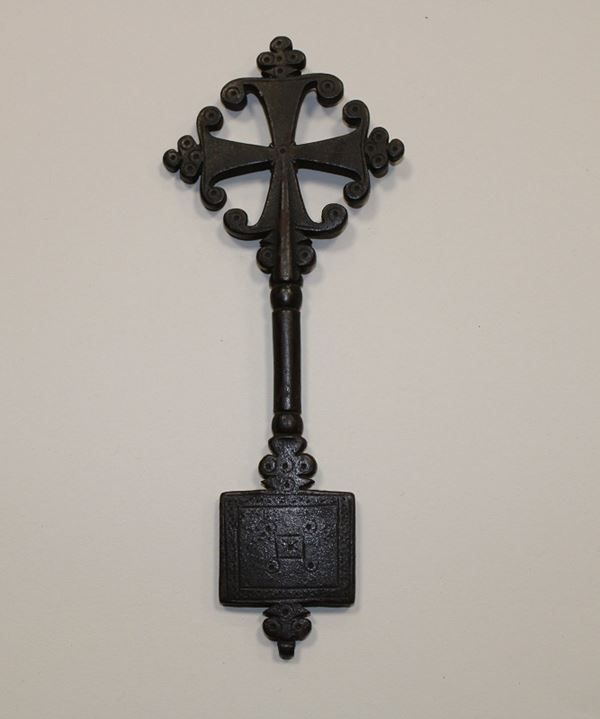
15th Century Hand Cross
This hand cross has been meticulously crafted from a single piece of iron. Characterized by its pattee cross design, the flared arms terminate in elegant quatrefoils. Both sides are intricately decorated with engraved line ornamentation and stamped circles, showcasing the artisan's skill.
The Ethiopian Orthodox Church has a rich tradition of religious artifacts, one of which is the hand cross, often used by priests during services and rituals. These hand crosses are typically made of wood or metal and are intricately designed, often featuring religious symbols and motifs that reflect Ethiopian Christian art.
The hand cross serves both a ceremonial purpose and a personal one for priests, who may carry it during processions or use it in blessings. The design can vary significantly, with some hand crosses being quite elaborate, showcasing the craftsmanship of Ethiopian artisans. These items are not only important for worship but also hold cultural significance, symbolising the deep-rooted traditions of the Ethiopian Orthodox community.
Accession Number: KO0702/01
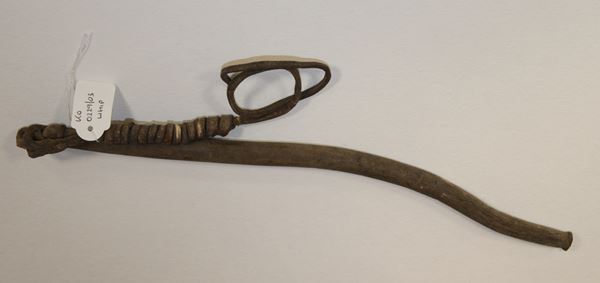
Leather Whip
These whips were employed to create sharp cracks in the air, serving as effective tools to deter destructive bird species. Farmers waved them to protect maturing wheat fields from flocks that threatened to peck away at the precious grains.
Accession Number: KO0229/03
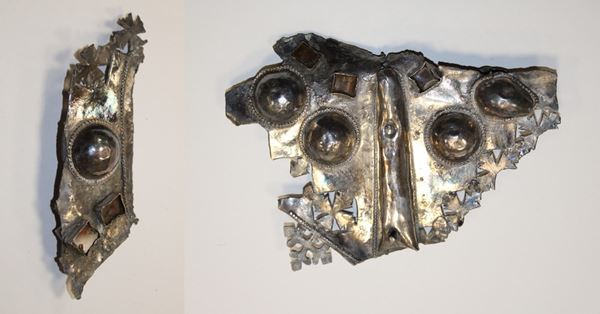
Silver Processional Cross Fragments
These are fragments of a silver cross taken from a church in Magdala after the British victory over Emperor Tewodros. Such religious and cultural items were often seized during the campaign.
Ethiopian crosses are distinctive in Christian art, reflecting a rich variety in form and design. Their significance grew following the Aksumite empire's conversion to Christianity around 330 A.D. However, few processional crosses from before the seventeenth century exist due to the destructive Islamic incursions in the sixteenth century.
Accession Number: KO0229/09&10.
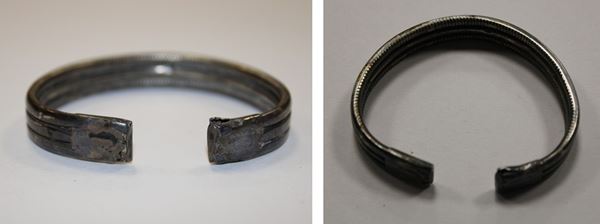
Silver Bracelets የእጅ አምባር
Made in Ethiopia before 1868, these bracelets acquired during the expedition would originally have belonged to Ethiopian women. They represent personal artifacts from the local civilian population.
Accession Number: KO0229/12&13
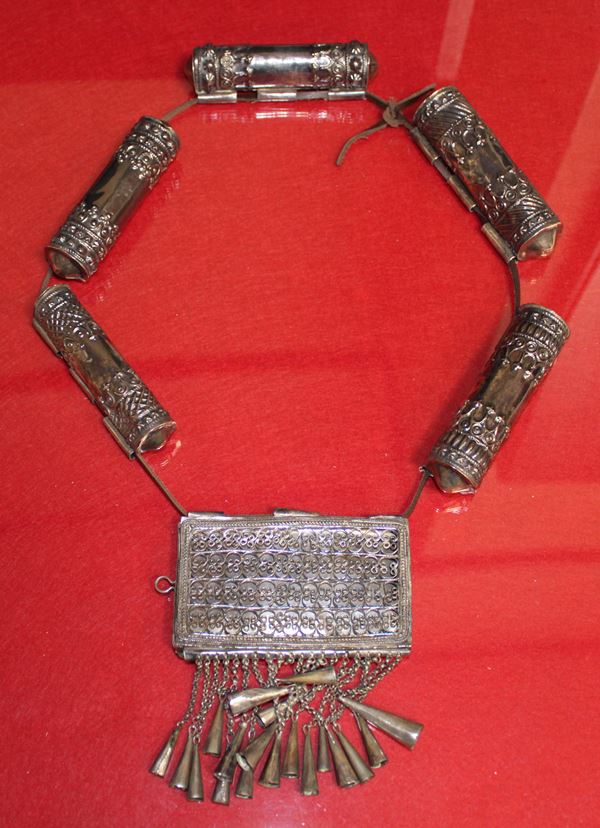
Silver Ornamental Necklace containing prayer scrolls
Made in Ethiopia before 1868
Dating back over 2,000 years to the Aksum period, Ethiopian jewellery has long been a symbol of beauty and cultural identity. Artisans skilfully crafted pieces using materials such as gold, crystals, stones, pebbles, shells, animal skins, and strings. These exquisite creations not only adorned the wearer but also reflected their social status and heritage.
Ethiopian smiths, a trade held almost exclusively by Jews known as the Beta Israel, were active in traditional Ethiopian society from at least as far back as the mid-1950s. Their craftsmanship played a significant role in the continuation and evolution of Ethiopian jewellery-making traditions.
This Ethiopian jewellery is characterized by its unique and intricately detailed designs, reflecting a merging of traditional Ethiopian design with Yemenite influence. Particularly, silver-work is noted for its intricate use of filigree and fine granulation, adding to the distinctiveness of Ethiopian jewellery.
Accession Number: KO0229/07
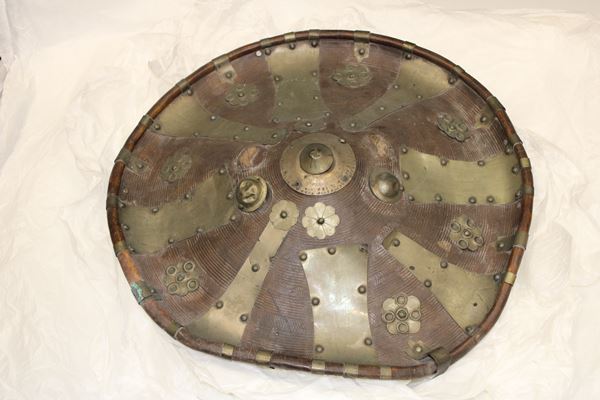
Ceremonial Shield
The shield is a circular hide-backed design made of metal (likely copper). It features a central circular boss and intricate decorative details, such as flower-like rivet patterns. Metal strips radiate outward from the centre, reinforcing the shield's structure and providing additional support.
Traditionally, Ethiopian shields were round and crafted from thick hide. However, the incorporation of elaborate decorations became a distinctive feature in the royal courts of Ethiopia. Soldiers of this period often also engraved or punched their names, titles, and sometimes their lineage onto the metal bosses of their shields. The Ethiopic script around the rim of the boss here reveals the names and ranks of several different owners before the shield was taken at Magdala in 1868. It may have been passed down, sold, or claimed in battle by these warriors. The presence of titles like Fitawrari (Commander of the Vanguard) and Shaleqa (Commander of a Thousand) confirms that this high-quality, decorated shield belonged to elite officers in Emperor Tewodros II’s army. Four of them can be identified from the inscriptions:
- At the top of the shield is a line chiseled in a very thin, somewhat hurried hand: ዘጋሻው ፊታውራሪ ገብሩ (Za-gashaw Fitawrari Gabru). This translates roughly as "Of his shield, the Fitawrari Gabru", or simply "The shield of Commander Gabru". Fitawrari was a highly prestigious traditional military title meaning "Leader of the Vanguard", and Gabru was a popular Ethiopian name meaning "His [God’s] servant".
- On the right, a vertical arc of characters is carved with much thicker, wider, and more deliberate chisel marks down the edge of the boss: የሻለቃ ተክሌ (Ya-Shaleqa Takle), meaning "Of/belonging to Commander Takle". Shaleqa is a military title literally meaning "commander of a thousand", historically equivalent to a Major or Battalion Commander. The name Takle is probably an abbreviation. In the Ge'ez language, the root takle or tekle (ተክለ) translates literally to "my plant" or "my seedling", but culturally, this serves as a metaphor for "the work of" or "a creation of". In this context it’s likely to be a short version of a longer and more formal name such as Teklemariam - "creation of Mary", or Teklehaimanot - "creation of the Faith".
- The script curving along the bottom rim of the shield boss is different again, and some characters are quite stylized. It reads: ጋሻው የገብረ መድኅን (Gashaw ya-Gabre Medhin), meaning "Gabre Medhin’s shield". Gabre Medhin or Gebremedhin is a classic Ge'ez/Amharic name meaning "Servant of the Saviour".
- On the left is another short inscription: ያሰገደ (Ya-Sagede), meaning "Of/belonging to Sagede" - the name Sagede possibly meaning "one who bowed/worshiped."
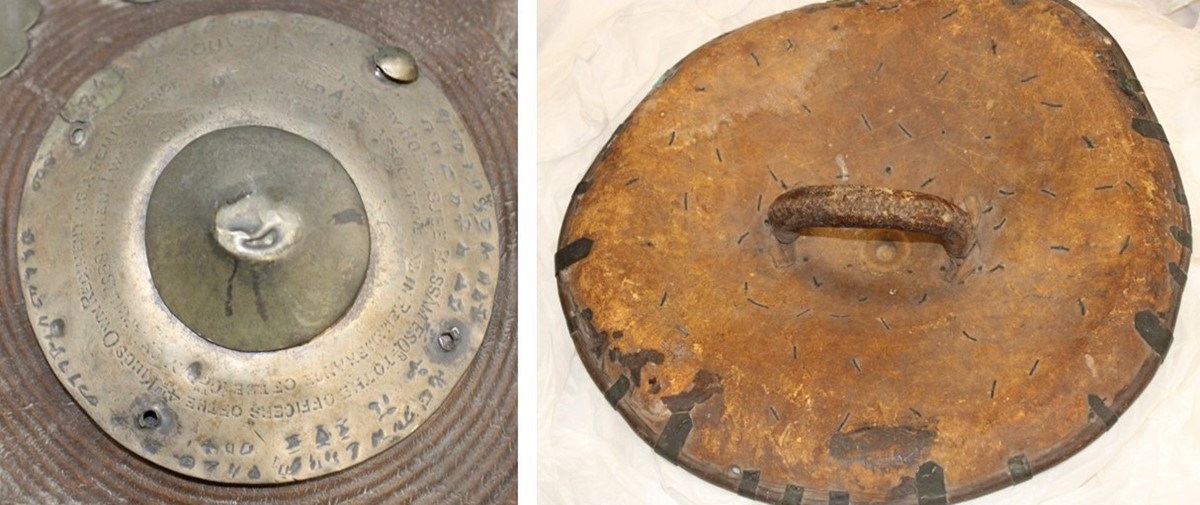
Within the ring of Ethiopic script is another engraving in English: "A Souvenir Presented by Hormusjee Rassam Esqr, to the Officers of the 4th King's Own Regiment as a reminiscence of old Aden associates and in Remembrance of 10th day of April 1868 when I was captive at Magdala." Hormuzd Rassam (1826–1910) was an Iraqi-Assyrian archaeologist who became a naturalised British citizen and diplomat. In 1866 he was sent to Ethiopia by the British government to negotiate the release of hostages held by Emperor Tewodros II, but did not succeed in this mission. He himself was taken prisoner at Magdala and held with the other hostages until they were released by the military campaign two years later. At this point he presumably claimed the shield as a 'souvenir' from one of Tewodros's defeated soldiers, before presenting it to the officers of the King's Own some time later.
Accession Number: KO1477/001
18th Century Spearhead
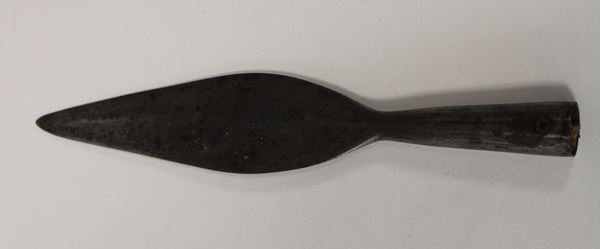
A metal spearhead featuring a pointed tip, with its wooden handle removed. Spearheads were often detached from their wooden shafts to facilitate packing the trophy into a kit bag for transportation back to the UK.
The spear holds deep cultural significance in Ethiopia, symbolizing resilience, independence, and tradition. Historically central to warfare and hunting, it represents masculinity and protection in many communities. Often used in rituals and ceremonies, its intricate craftsmanship reflects tribal identity and artistic heritage. Today, it stands as a powerful emblem of Ethiopia’s enduring spirit and rich cultural legacy.
Accession Number: KO0229/18
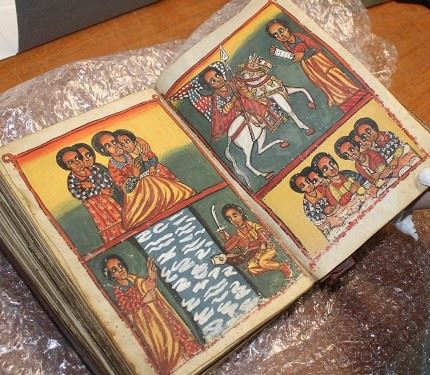
ድርሳነ ሚካኤል, Homilies of the Archangel Michael, by Various Authors
This beautiful 18th-century book exemplifies the religious and cultural manuscripts originating from Magdala. These texts hold immense significance within the Ethiopian Orthodox Church. Saint Michael, whose veneration first emerged under the patronage of Emperor Zär’a Ya’eqob (d. 1468), remains the most venerated archangel in Ethiopia due to his intercessory role on behalf of the faithful.
The sermons in this compilation were read aloud on the feast days stipulated for each text. The manuscript also catalogues the miracles of St Michael and provides monthly liturgical readings. It’s written in a combination of the ancient Ethiopian language of Ge’ez and the more modern Amharic. The book contains 124 folios of thick and inflexible parchment, each measuring 23 cm x 16 cm. There are twenty illuminations and a cycle of miniatures featuring the miracles of St Michael. It still has the original binding of thick wooden boards covered in dyed goatskin, blind-tooled with a cross design set within a double border of blind-stamped tooling, lined with textile. The leather shows some wear and tear, especially on the spine.
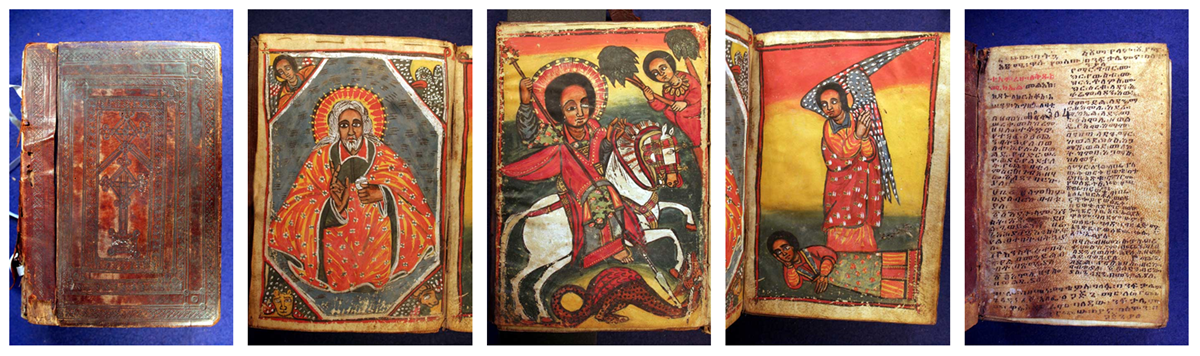
The manuscript can be dated to the late 18th century based on mentions of the current sovereign within the text: King Iyoas I ኢዮአስ, with the throne name Adyam Sagad, አድያም ሰገድ, was king of Ethiopia from 27 June 1755 to 7 May 1769.
The book originally belonged to a man named ኤውስጠቴዎስ (Ewosṭātewos) and wife ወለተ፡ ጽዮን (Walata Teson), whose name appears throughout and at the commencement of the homilies. The manuscript was acquired from Northern Ethiopia Gondor during the Napier expedition, according to a note in English: “Homily of the Savour of the World. Presented to the Rev…. J[?] Fisher Turner by J. L Stokes Esquire ¼ K.O. Regt in token of the esteem of friendship he had for his son F. C. Turner F. C. Esquire ¼ K. O. Royal Regiment. Senafe Abyssinia 26th of May 1868”. (Senafe is a town in southern Eritrea, on the edge of the Eritrean highlands)
Accession Number: KO LIB 0066
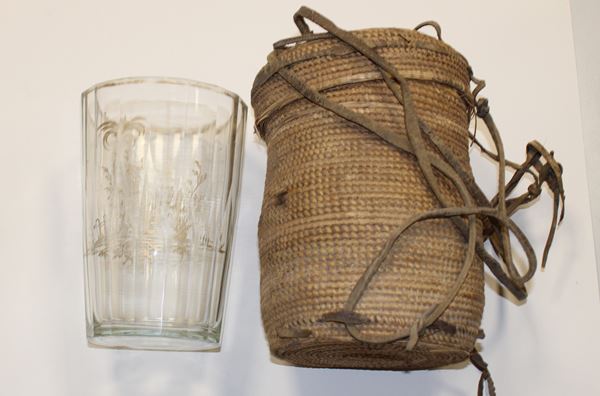
Glass Tumbler
This 18th-century European glass tumbler, accompanied by its original storage basket, offers insights into the cultural exchange between Europe and Ethiopia. Emperor Tewodros may have acquired this object from one of the European artisans working in his court.
KO 0229/14
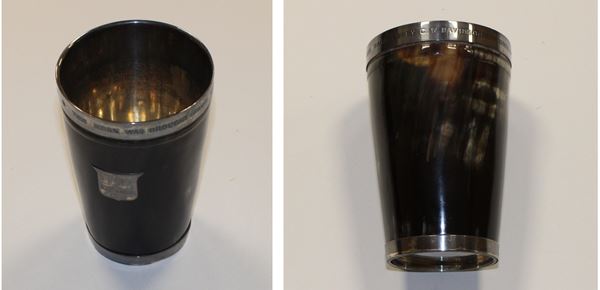
Horn Tumbler
This is another example of a traditional household item taken from Magdala. An English inscription runs around the rim: ‘This horn was brought from Magdala by CM Davidson, 4th King's Own Regiment, 1868’, and another is engraved on a small plaque on the side: ‘Henry GL Davidson, from his godfather, Henry Davidson, 1872’.
KO0776/02
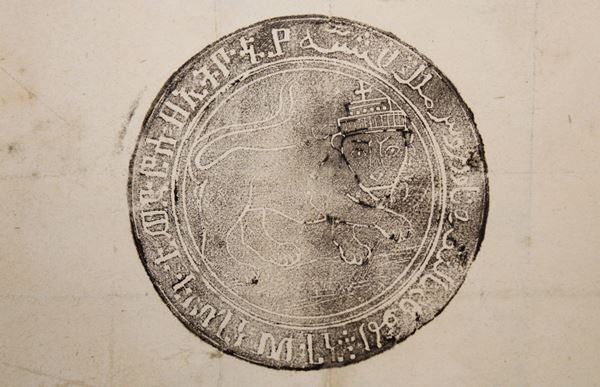
An impression of Emperor Tewodros’ state seal
Seals were used to authenticate official documents and letters, and this impression is a rare example of the Emperor’s personal insignia.
It would often have been used on letters sent to foreign powers, and the text around the edges is bilingual, demonstrating a pragmatic approach to international affairs. In addition to Amharic (the language spoken in Ethiopia), it uses Arabic, which was the language of international diplomacy in the wider region. The portion in Amharic reads: ንጉሠ ነገሥት ቴዎድሮስ ዘኢትዮጵያ (Negusa Nagast Tewodros za-Ityoppya), which translates as ‘King of Kings Tewodros of Ethiopia’. The Arabic text is similar: الملك المنصور تادرس ملك الحبشة (Al-Malik al-Manṣūr Tādrus, Malik al-Ḥabasha), meaning ‘The victorious king, Taodros, King of Abyssinia’.
The crowned lion depicted in the centre of the seal is known as the ‘Lion of Judah’, a symbol originating from the old testament of the Hebrew Bible. It gained profound historical and cultural significance in Ethiopia because the ruling dynasty claimed descent from the Israelite Royal House of Judah, through King Solomon and the Queen of Sheba. The lion represents strength, kingship, and pride. Ethiopian emperors used this motif in their royal insignia to recognise the old testament emphasis of Ethiopian Christianity and to declare their sacred duty to god. 'Conquering Lion of the Tribe of Judah' was a traditional title indicating the Emperor’s authority and divine election.
KO0229/16
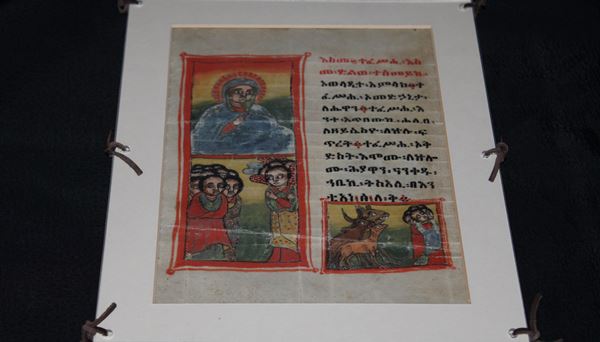
Illustrated page from an Abyssinian manuscript
A parchment manuscript page brought back from Abyssinia by General Sir E. R. P. Woodgate (then only a lowly Ensign), who served in the campaign. It is a single page from a larger illuminated manuscript - likely a book of homilies, psalms, prayers, or a collection of lives of the saints, given the combination of devotional imagery and liturgical text. It’s written in Ge'ez, the classical liturgical language of the Ethiopian Orthodox Tewahedo Church. The text is a closing prayer for the manuscript, confirming the completion of the work and invoking a blessing upon the reader.
KO LIB 136/2
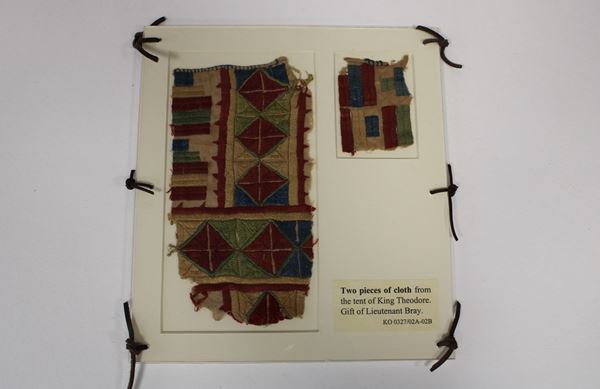
Two pieces of cloth from the tent of Emperor Tewodros
These colourful pieces of cloth from the tent of Emperor Tewodros are typical of the kind of ‘souvenirs’ that were sought by the soldiers after the victory at Magdala. Those items that were personally connected to the Emperor himself were particularly prized.
KO0327/02A-02B
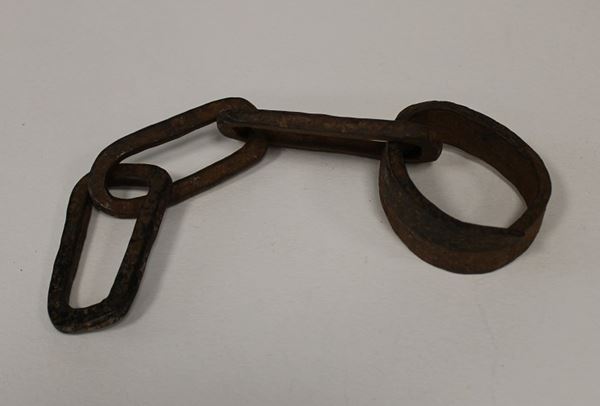
Iron Manacle
This iron manacle is reported to have been removed from an English missionary held captive by Emperor Tewodros at Magdala. It was taken by Major E. W. Bray in 1868, symbolising the very reason for the British military intervention.
KO0327/03
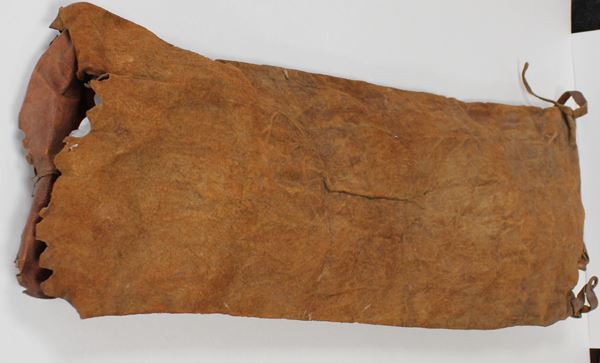
Leather Water or Corn Bag
A leather bag for water or corn from the Abyssinian campaign. This is an example of an everyday object that British soldiers may have used during the long marches of the Expedition.
KO0229/19
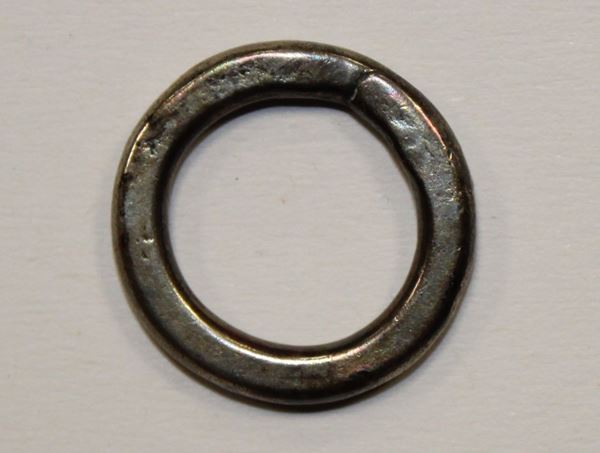
Ring from an Ethiopian Soldier
A ring taken from a deceased Abyssinian soldier by Lieutenant Borrett. It serves as a personal and sombre memento of the conflict. In Borrett’s letters to his wife he usually shows sympathy and regret for the slain and wounded on both sides. However, standards of battlefield behaviour were different in the 1860s to what they are now, and after Magdala had fallen he wrote that he had acquired, among other items, ‘A ring I cut off a dead enemy’.
KO0467/04
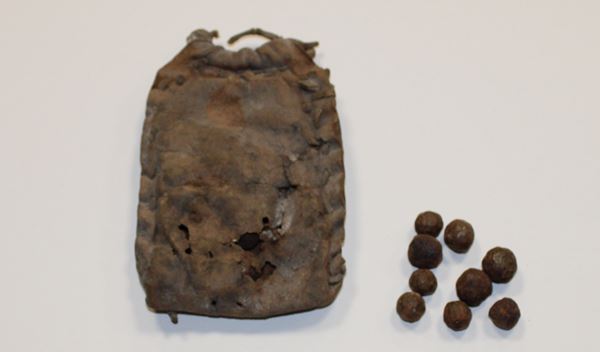
Leather Wallet with Bullets
This leather wallet containing bullets provides a poignant and personal insight into the life and equipment of those who fought in the conflict. The bullets are iron, not lead, and have been hammered into shape. Iron was plentiful in Ethiopia.
KO0229/05
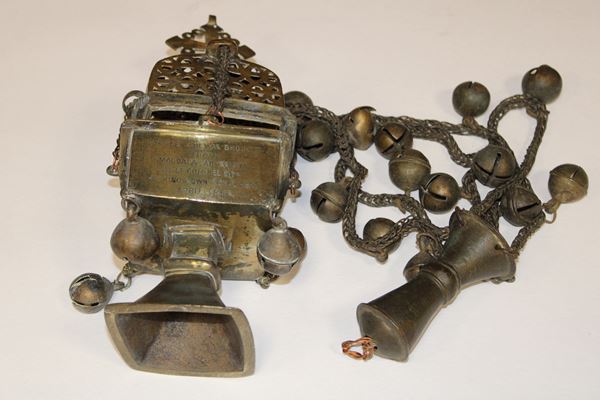
Ethiopian Orthodox Church Censer
A censer is used to burn incense, which has been used since ancient times to symbolise the prayers of the faithful rising to God. As the censer is swung backwards and forwards on its chains, the smoke billows outwards and upwards to perfume the whole church. The bells on the censer symbolise the Elders surrounding God in the Revelation of St John, the final book in the Bible.
On one side of the body of the censer is an inscription in Ge’ez, the classical liturgical language of the Ethiopian Church. This follows a standard dedicatory formula intended to record the donation of a sacred item to a church and to ensure the donor's name is remembered in prayer. On the other side is an English engraving: ‘This censor [sic] was brought from Magdala, Abyssinia by Lt. Colonel Bray, 4th King’s Own Royal Reg.t, April 1868’.
KO01536/0
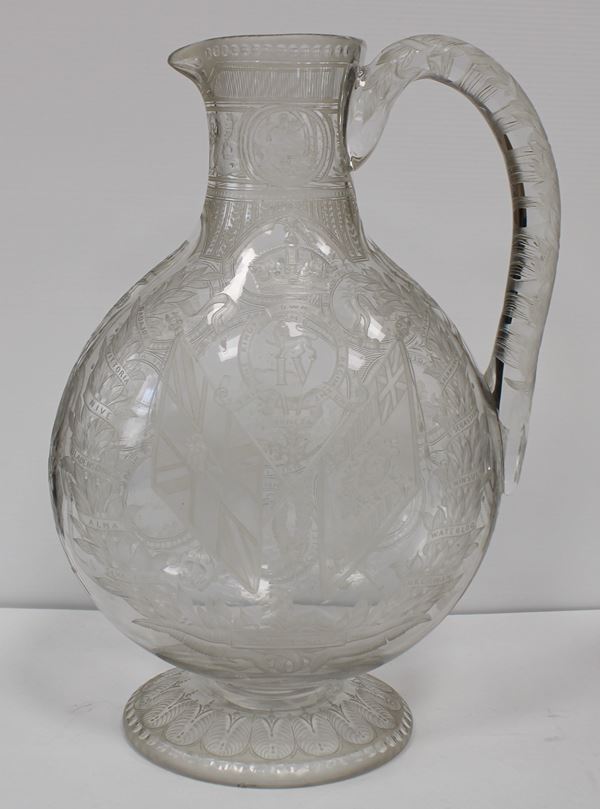
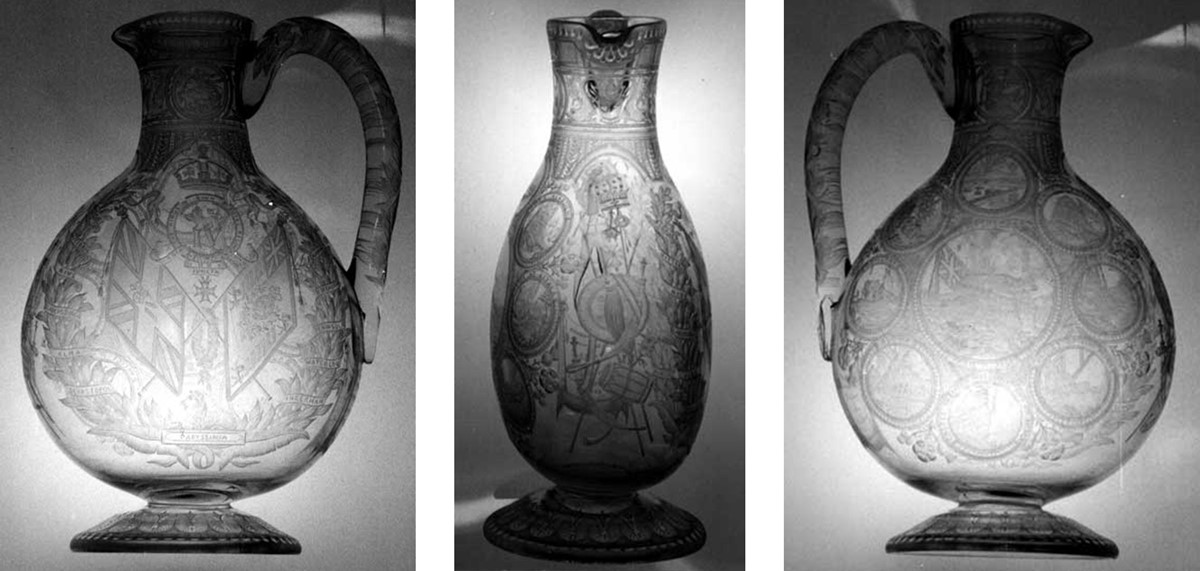
Glass Jug
Designed and engraved for the officers’ mess, this commemorative cut-glass jug was presented to the 1st Battalion of the King's Own Royal Regiment in 1869 by Messrs. Pellatt & Co, Glass Manufacturers to the Queen (Victoria).
One side is adorned with nine medallions depicting scenes of Magdala, while the other displays an elaborate wreath engraved with the names of various other historic battles in which the regiment was involved. According to Colonel L.I. Cowper, “It is said to have taken a year to cut, and was at one time insured for £2,000." - Volume Two, The King's Own: The Story of a Royal Regiment.
KO0199/01
Repatriation of Human Remains
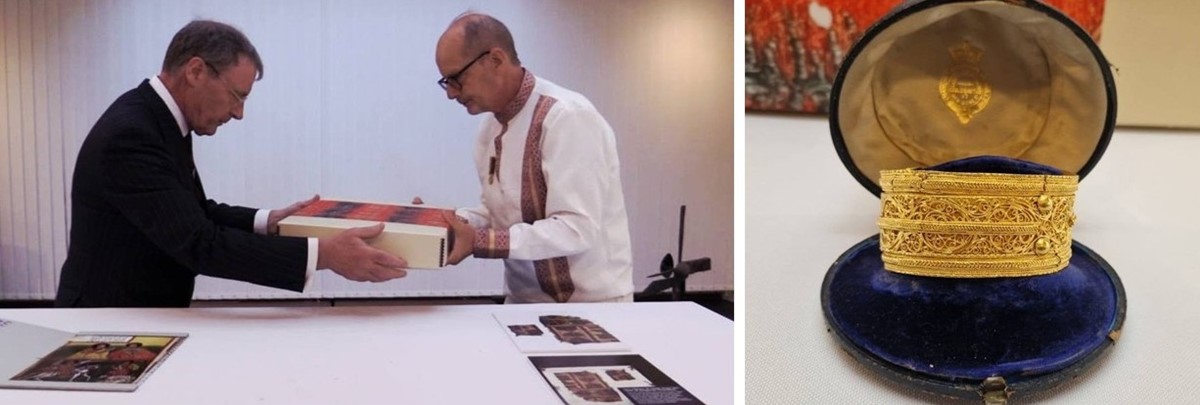
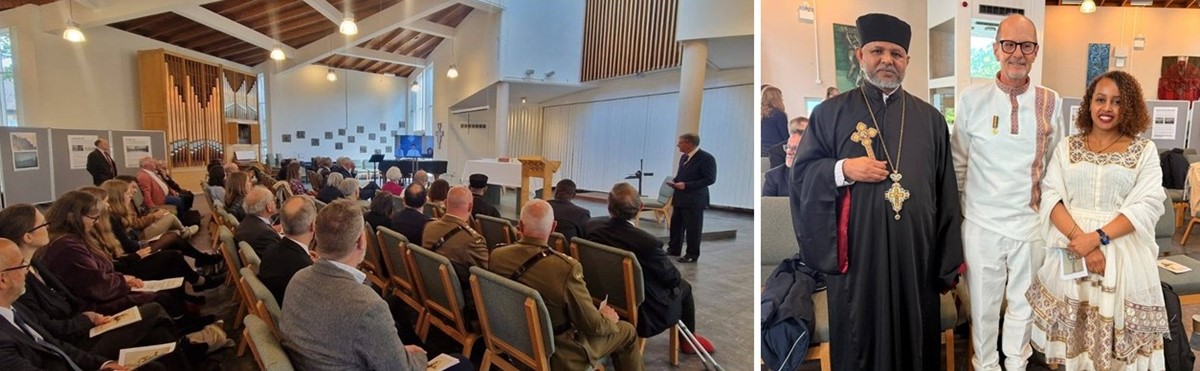
On 12 May 2026 the Trustees of the King’s Own Royal Regiment Museum Trust formally returned two human remains items to the Ethiopian Heritage Authority (EHA). The official repatriation service took place at St Martin’s Chapel on the University of Cumbria’s Bowerham Road campus, a location historically associated with the regiment as the site of the former King’s Own Bowerham Barracks.
The returned items, which have long been held in the museum’s collection but were not publicly displayed, consist of a lock of hair belonging to the Abyssinian Emperor Tewodros II and a piece of cloth stained with his blood. Both were taken by members of the 4th (King’s Own) Regiment of Foot after the battle at Maqdala. Following a blessing ceremony led by Father Abate Gobena and University of Cumbria Chaplain Clare Shepherd, the remains were formally transferred to Dr. Alula Pankhurst, who accepted them on behalf of the EHA.
In a poignant addition to the ceremony, the Napier family provided a personal link to the past. Lord Robert Napier (great-grandson of Lieutenant General Sir Robert Napier, who led the 1868 expedition) and his sister, Mrs. Ruth Self, presented a beautiful gold filigree bracelet to the delegation. Originally given by the Emperor to the wife of a British hostage during the siege, this stunning object has completed its journey alongside the relics to the Ethiopian capital, where it will be permanently displayed at the National Museum in Addis Ababa.
Tewodros is widely revered in Ethiopia as an influential figure in the founding of the modern state. Out of respect, the human remains will not go on display.
Find out more about the repatriation from sources across the web:
Photos from the Campaign
On arrival from India, the King’s Own marched many hundreds of miles inland to the fortress of Magdala. The Abyssinians were defeated during the Battle of Arogie, and the fortress was stormed a few days later. The conflict resulted in the sacking of the fortress of Magdala and the death of Emperor Tewodros II. These photos help to tell the story of the expedition from start to finish. They're accompanied by quotations from Lieutenant Borrett's letters to his wife, which give a first-hand account of the campaign.
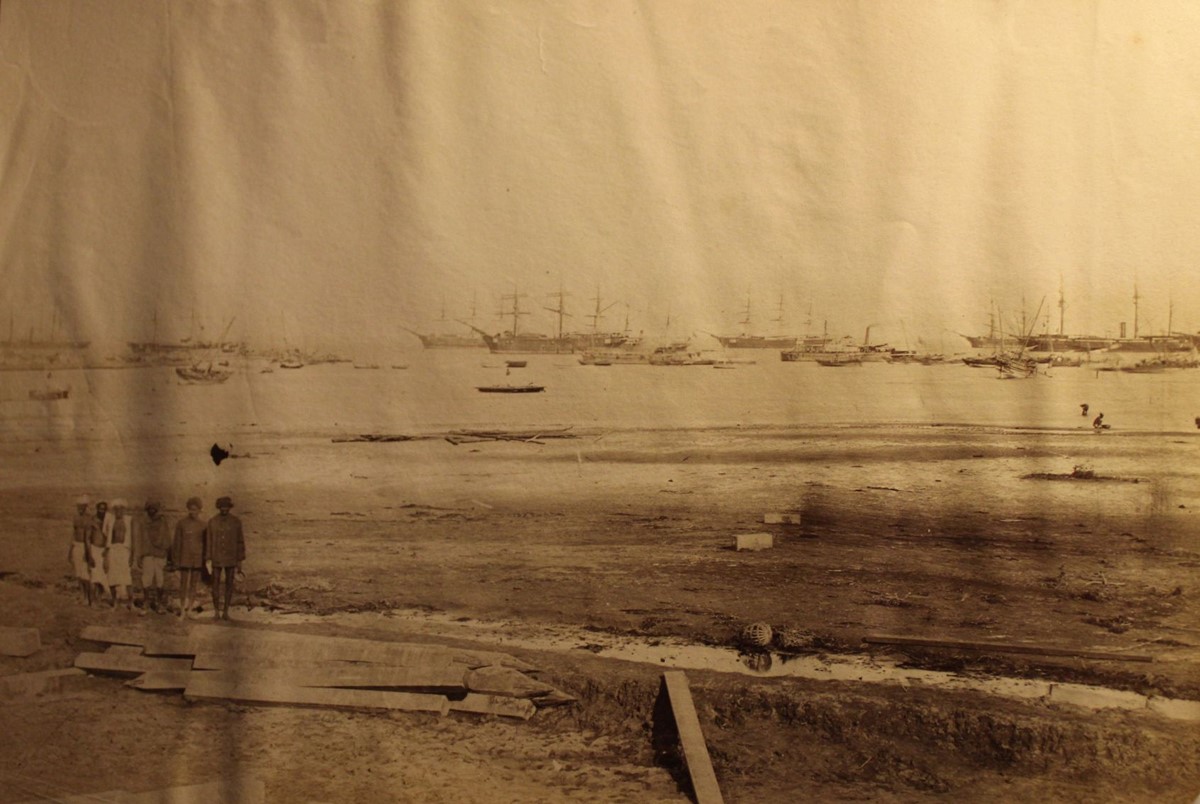
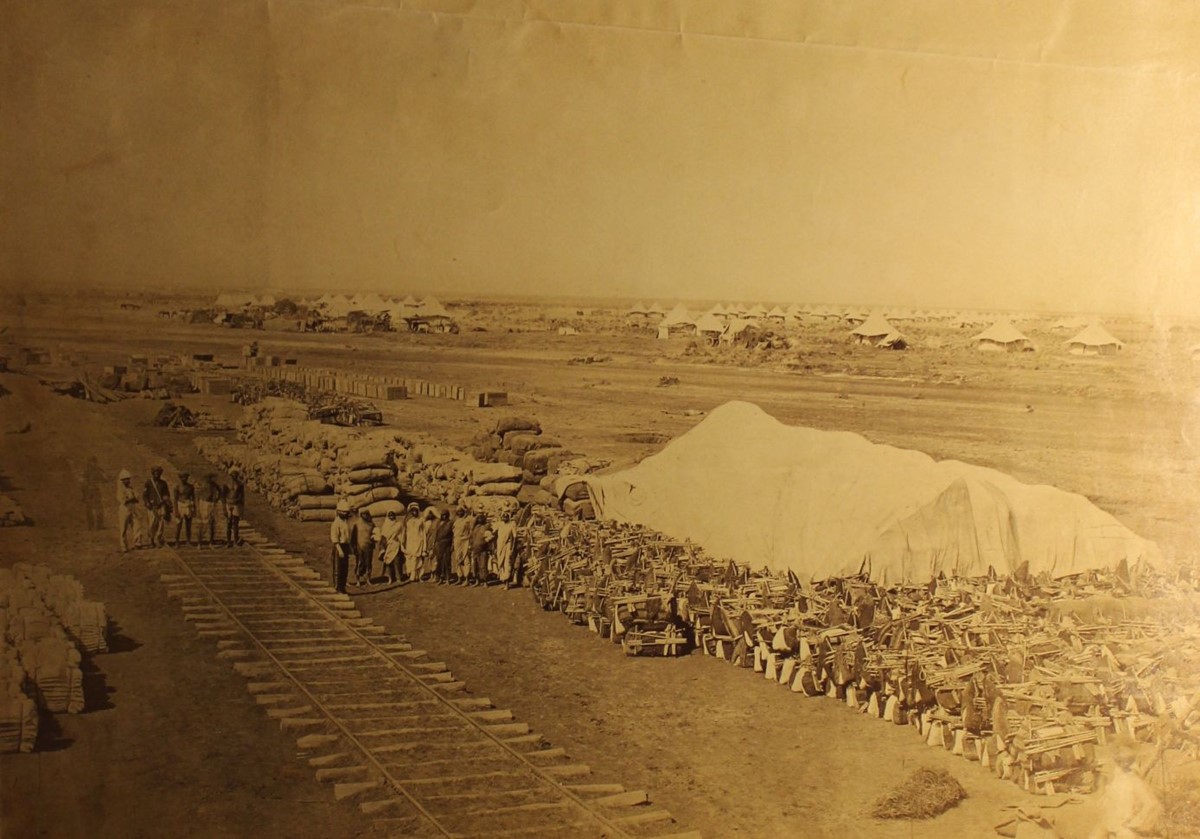
“Camp Zoola [Zula] is a wonderful place; the beach is covered with tents and is knee deep in sand, which nearly blinds one. Several piers have been made and on one a railroad is running a few miles into the country - the whole place is covered with stores, ammunition, cannons, guns, and rations and grog like the Men.” - Lt Borrett
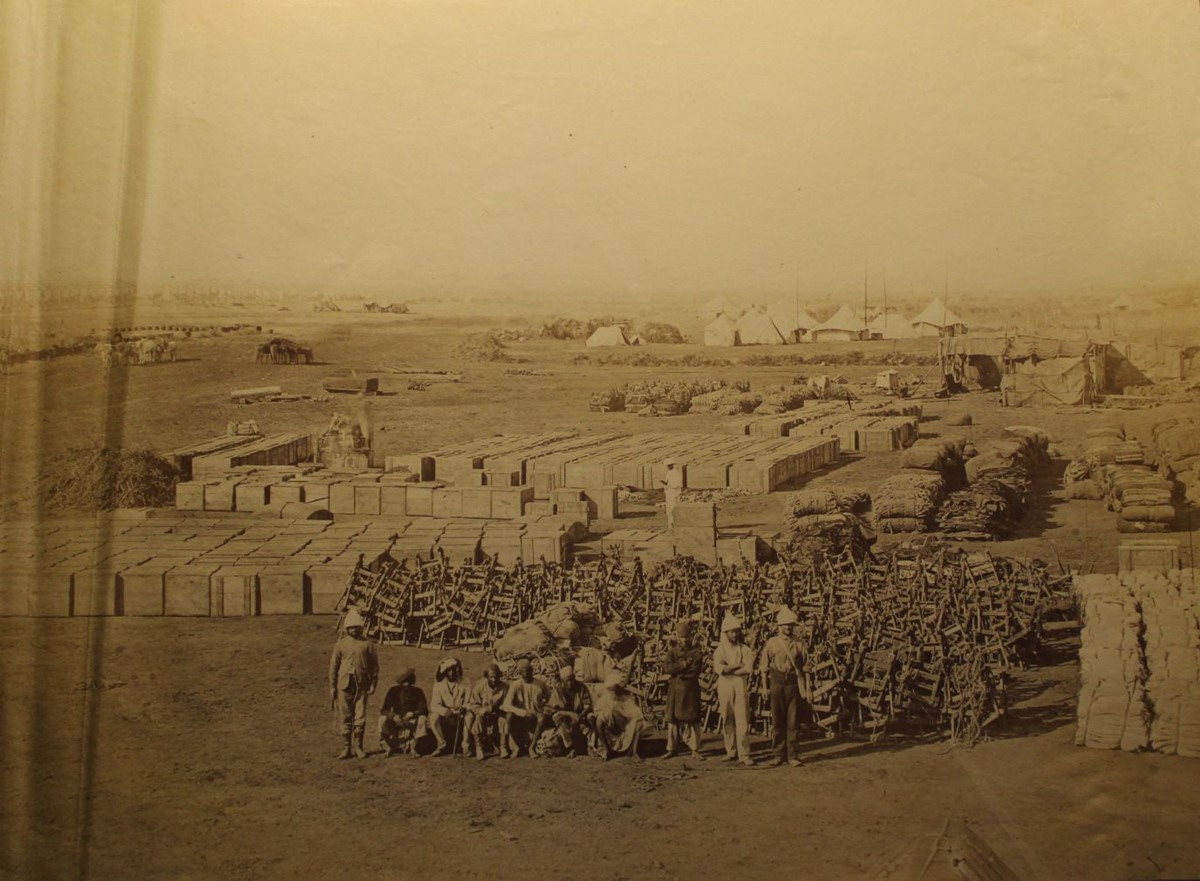
“The muleteers give us immense trouble, and yesterday many of them broke into open mutiny and went off with the mules; parties were sent out after them, and brought back 50 prisoners - they have every one of them been flogged.” - Lt Borrett
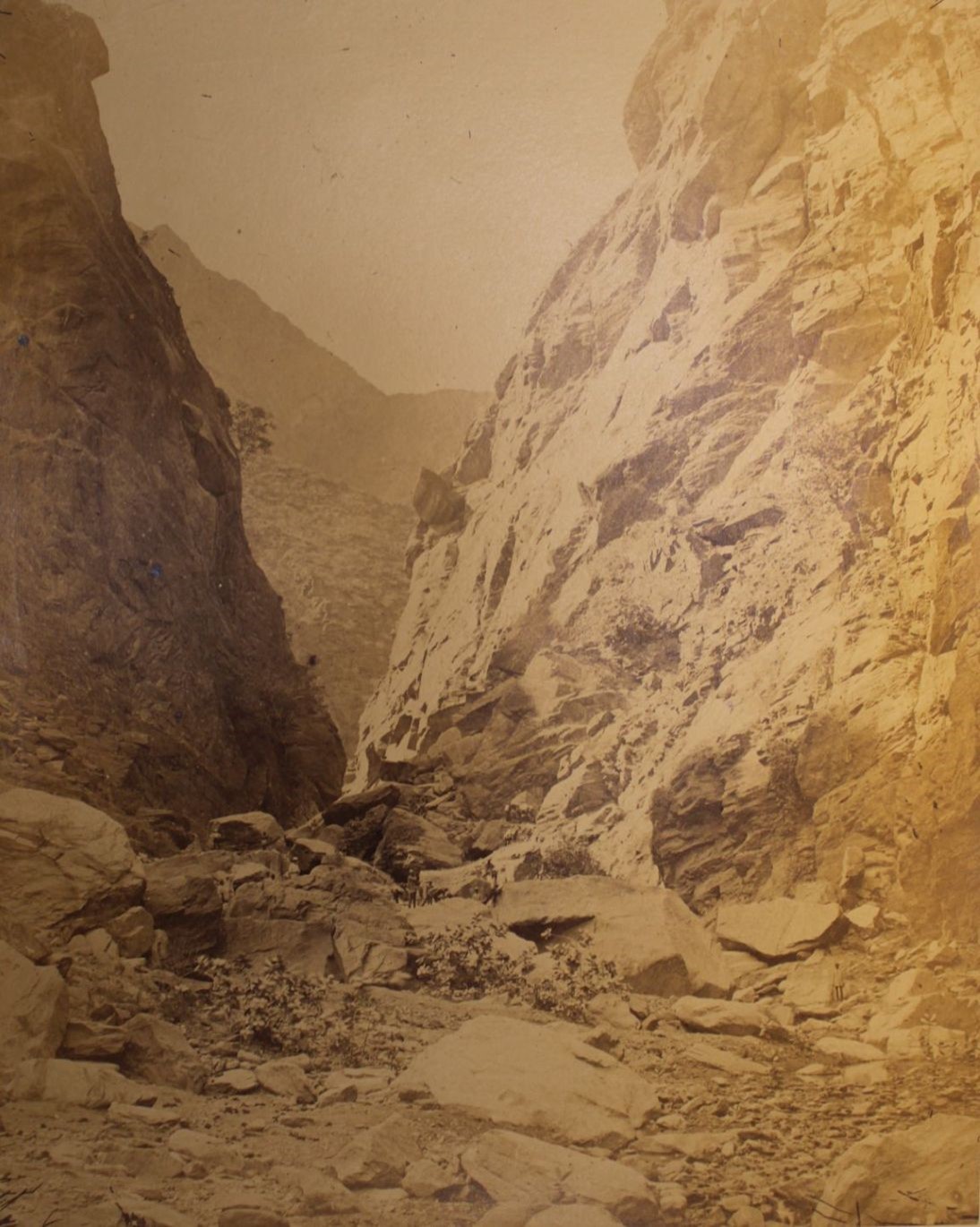
“I carried my filter, half a Commissariat biscuit, my flask filled with brandy and water, and my smoking apparatus. I got through the biscuit, but did not touch any liquids the whole way.” - Lt Borrett
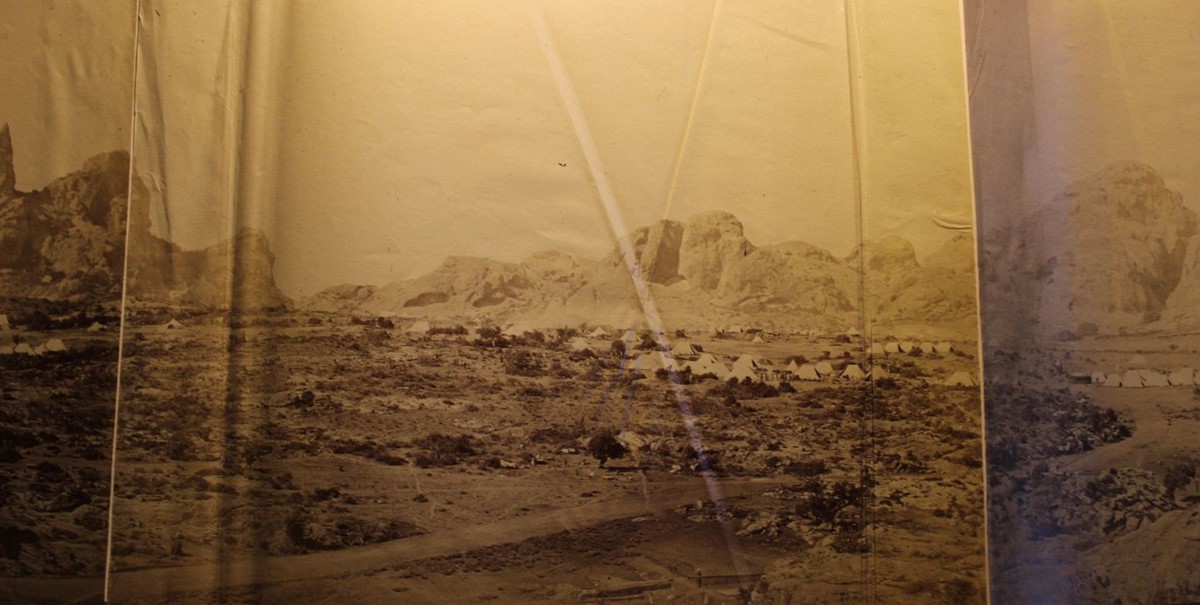
“The days here are very hot and the nights intensely cold; I can hardly keep myself warm, though I have procured another thick blanket - I have to roll myself up in flannel…” - Lt Borrett
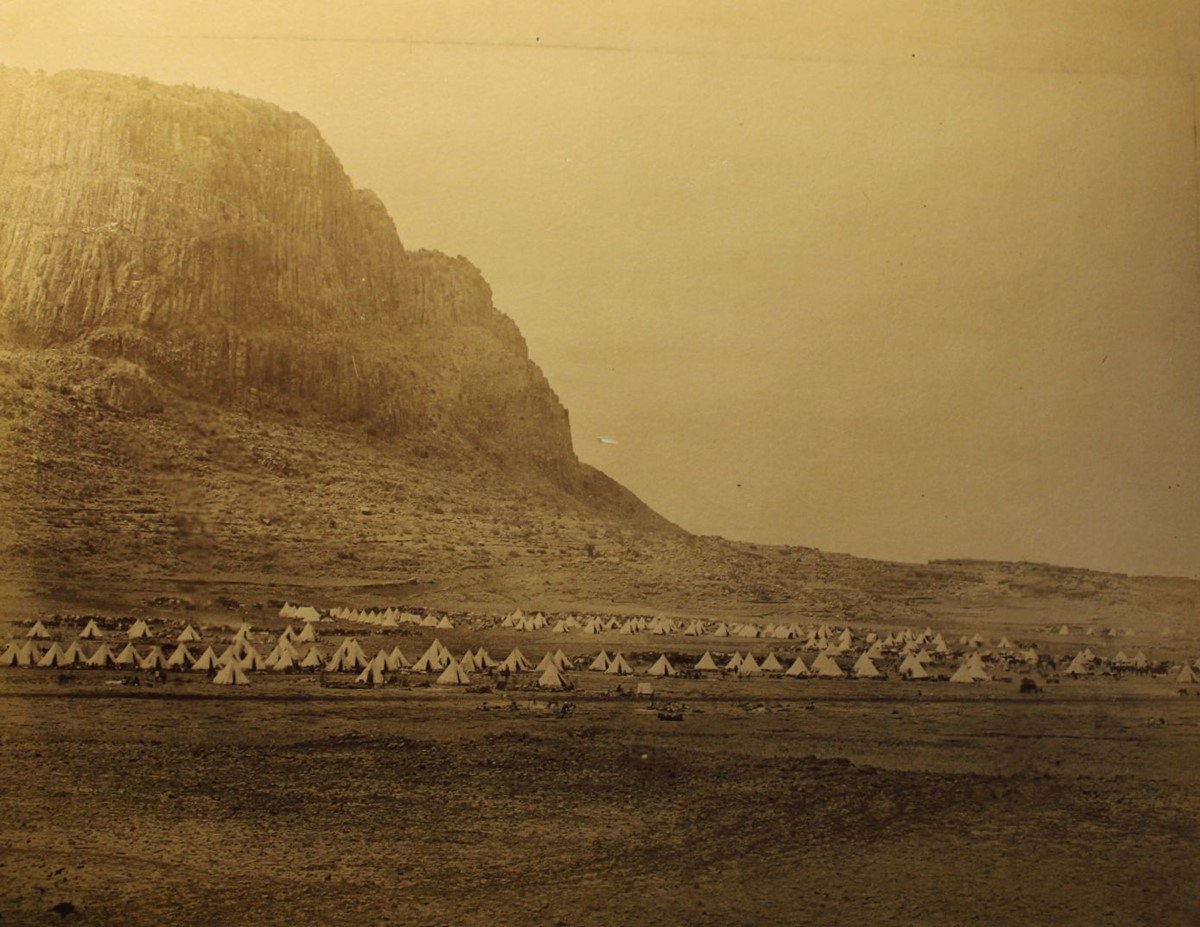
"The scenery is very grand here, and parts of it have reminded me of Poorundhur [Purandar in India] - looking down into the ravines." - Lt Borrett
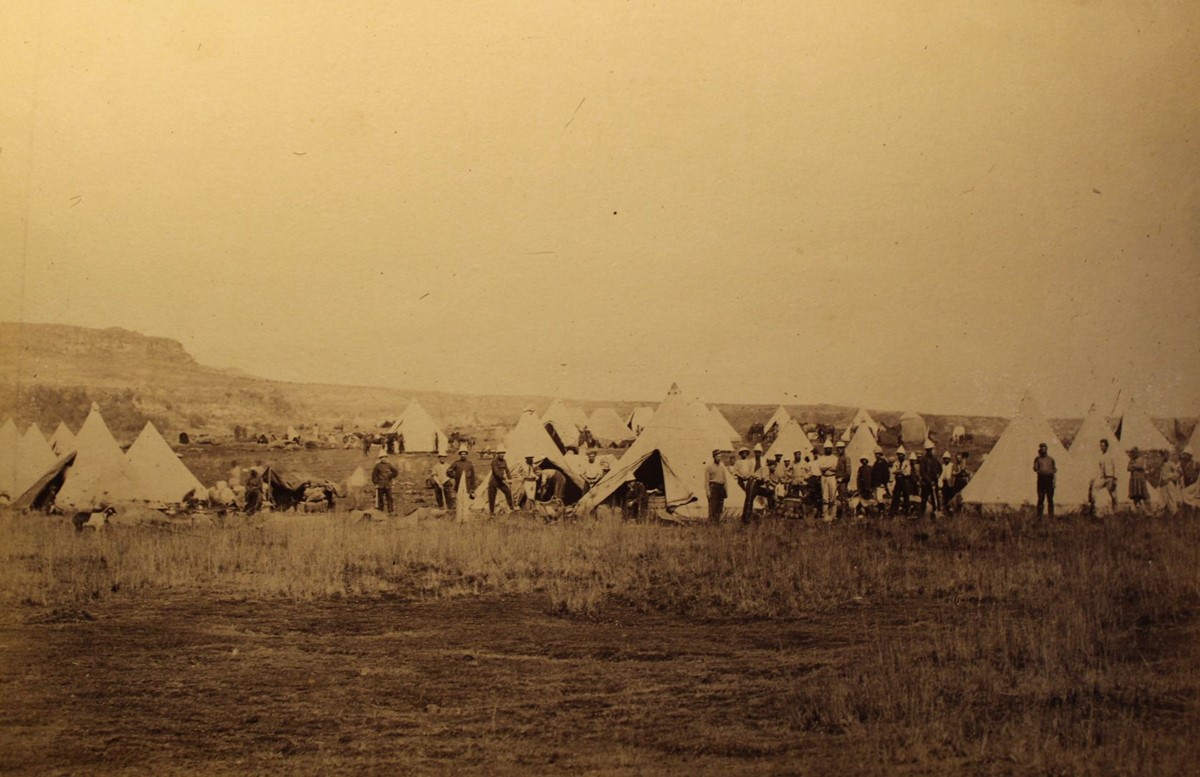
"This morning we had Devine [Divine] service at 8 A.M., and after breakfast the whole of the Men turned out to fortify the Camp - throwing up earthworks, digging ditches, and building walls. This place is in the Tigre country, the capital of which is 30 miles off. The Chief of the Tigre is at present friendly towards us - or rather neutral; but in the event of our meeting with his army of 40,000 Men; and so the Commander-in-Chief has thought it best to be on the safe side, and has determined on fortifying this Camp." - Lt Borrett
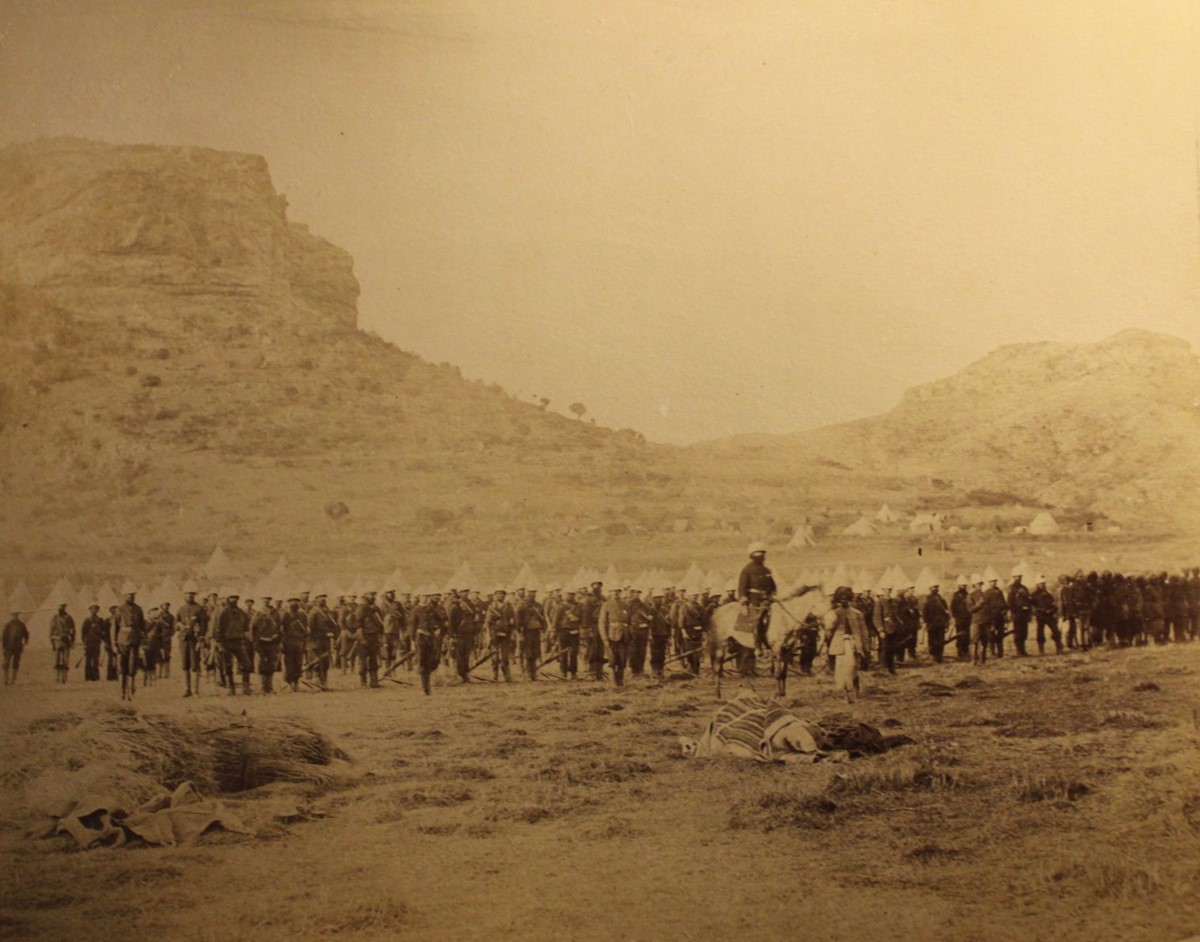
"On 25 Febry we marched five miles to meet Cassa Chief of Tigre. We had a parade at 12 noon. One Company formed a guard of honour, and the others formed a line in front of Cassa's army to protect the Camp. Sir R. Napier and Cassa had a Durbar to befriend us. At 3 P.M. we had another parade and went through a lot of movements to impress the Chief of Tigre with our strength." - Lt Borrett
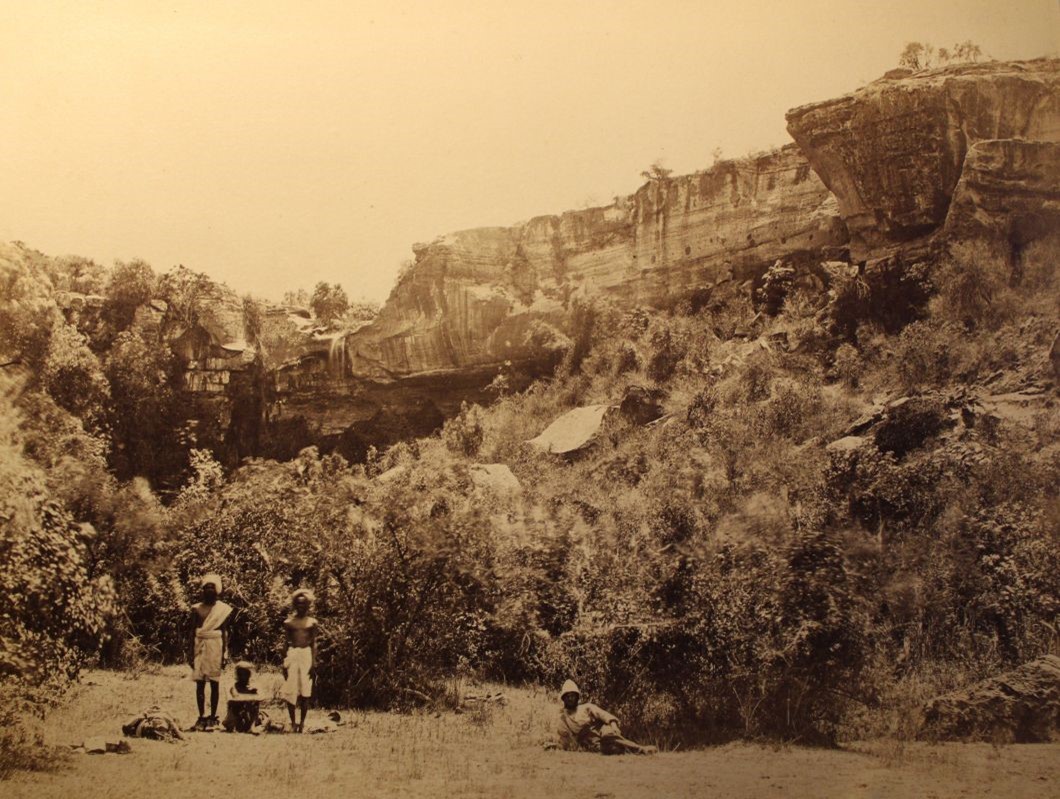
"Honey is very abundant. We get no bread, butter, beer, or any small things such as sugar, pepper, mustard etc in Abyssinia. I miss beer very much, but have got accustomed to doing without the others. My daily rations are 1 1/2 lbs meat (very tough) 1 lb biscuits, rice, sugar, tea, salt and preserved vegetables, of which I eat all I can catch hold of as being very healthy. We often manage to improve our dinners with game. No puddings in Abyssinia!!!!!!!” - Lt Borrett
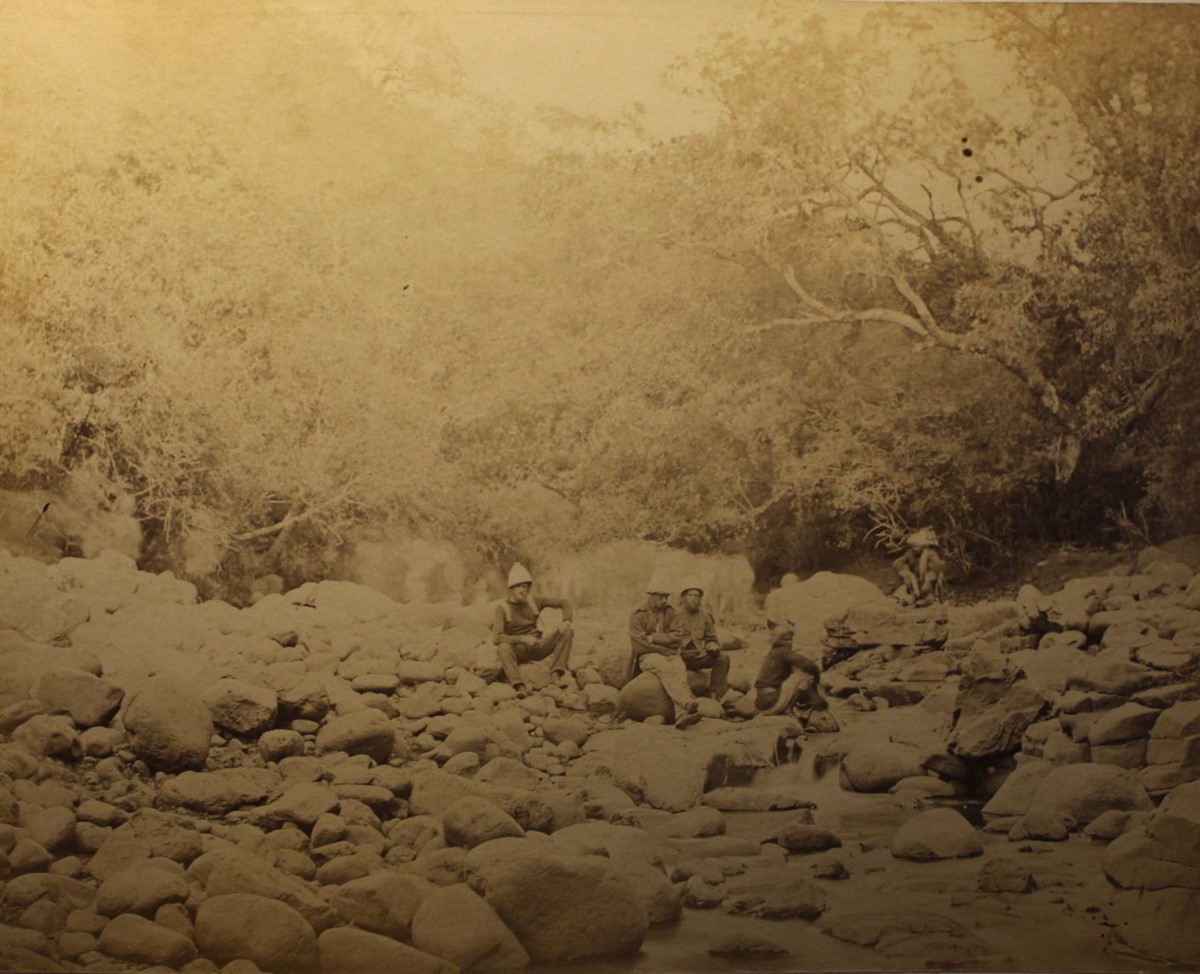
“The Country appears better cultivated as we advance - yesterday we passed through corn fields and saw many fine trees; hitherto the only bushes we have seen were cacti…Lilacs, roses and thistles are now abundant” - Lt Borrett speaking of the area around Attilla.
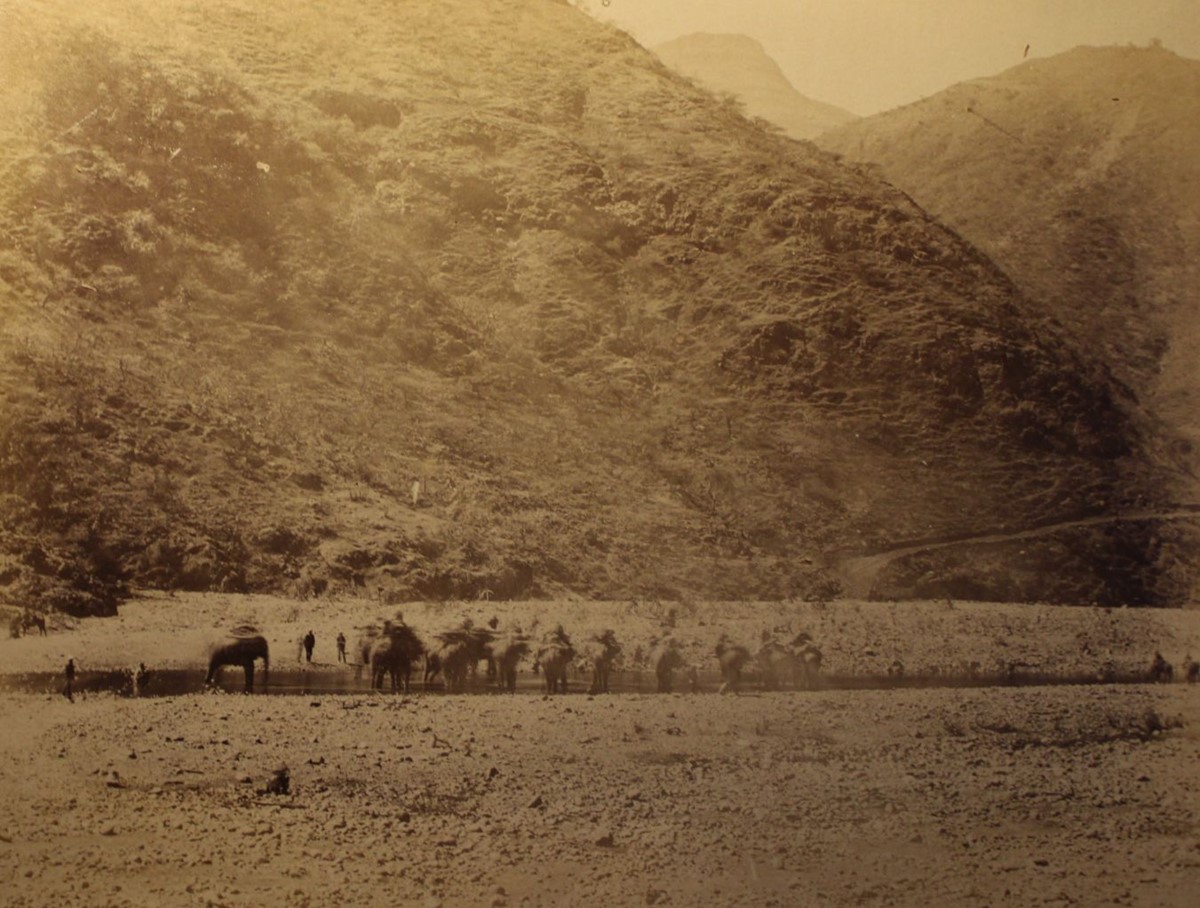
"The first eight miles was aong the table land, and then we came to the river Jeddah, the descent to which is 3000 feet. There is a good an broad road down to the bottom, but very steep, made by King Theodoreus [Tewodros]" - Lt Borrett
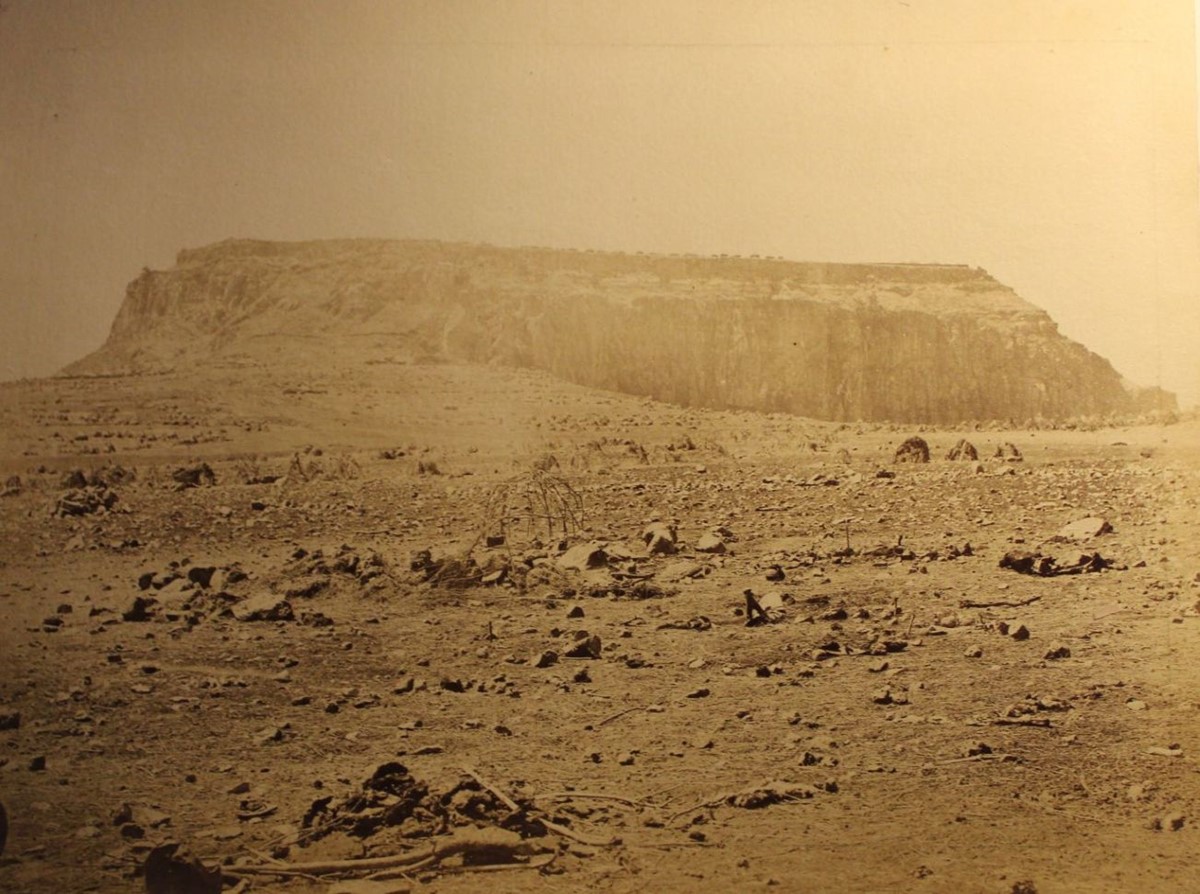
"At 4.30 P.M. ...a big gun opened on us from Magdala [Maqdala] - the shot weighing 50 lbs fell about 200 yards short…Gun after gun poured its shot at us from Magdala and the enemy was seen descending the heights in large numbers - estimated at about 8000 Men - mostly mounted." - Lt Borrett
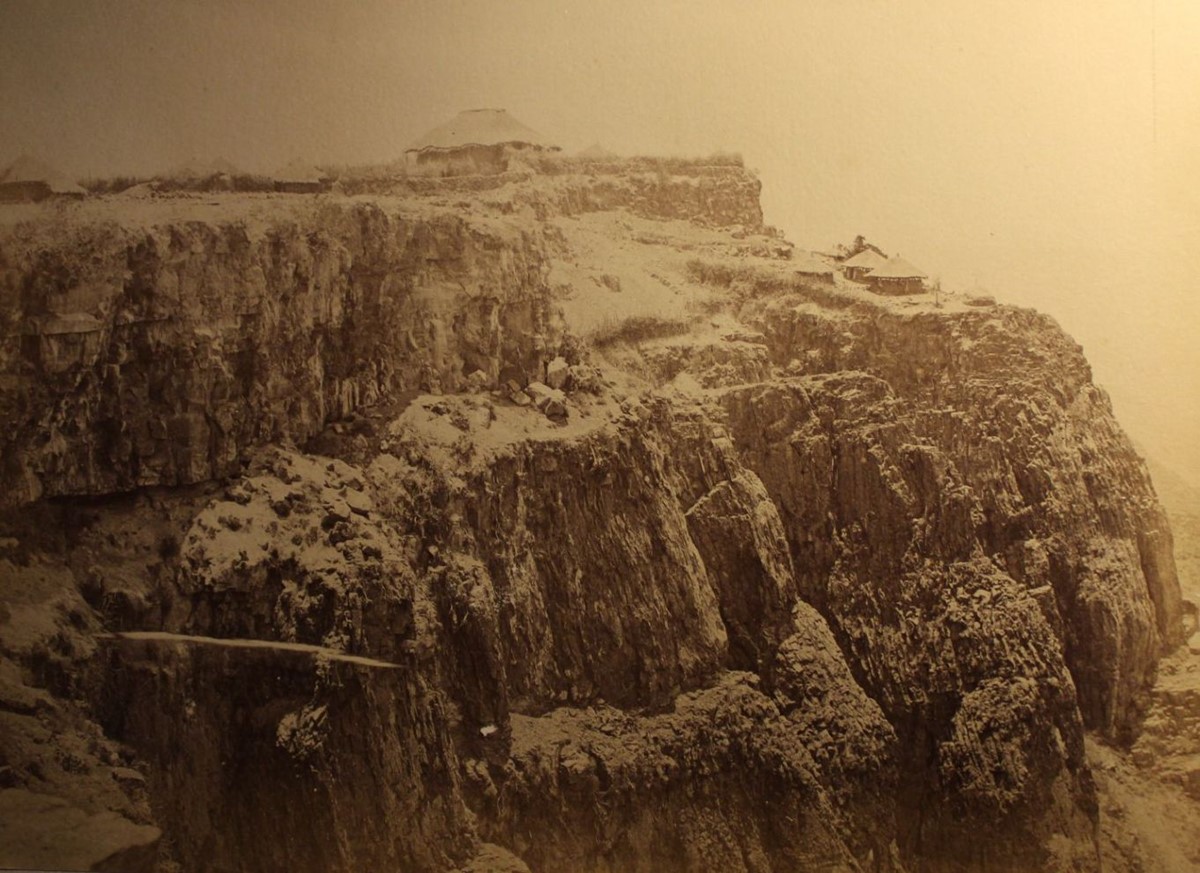
"We reserved our fire until within 150 yeards of the enemy, and then the King's Own let fly with the Sniders; the Abyssinians fell in large numbers, horses and men rolling over together in one confused mass. The enemy, who showed considerable pluck [bravery], stopped and gazed at us, and then slowly retreated firing from behind bushes. We continued to advance and drove the enemy back, who soon after this seemed to be seized with a regular panic - turning their horses heads and galloping back to Magdala [Maqdala]." - Lt Borrett speaking of the Battle of Arogi.
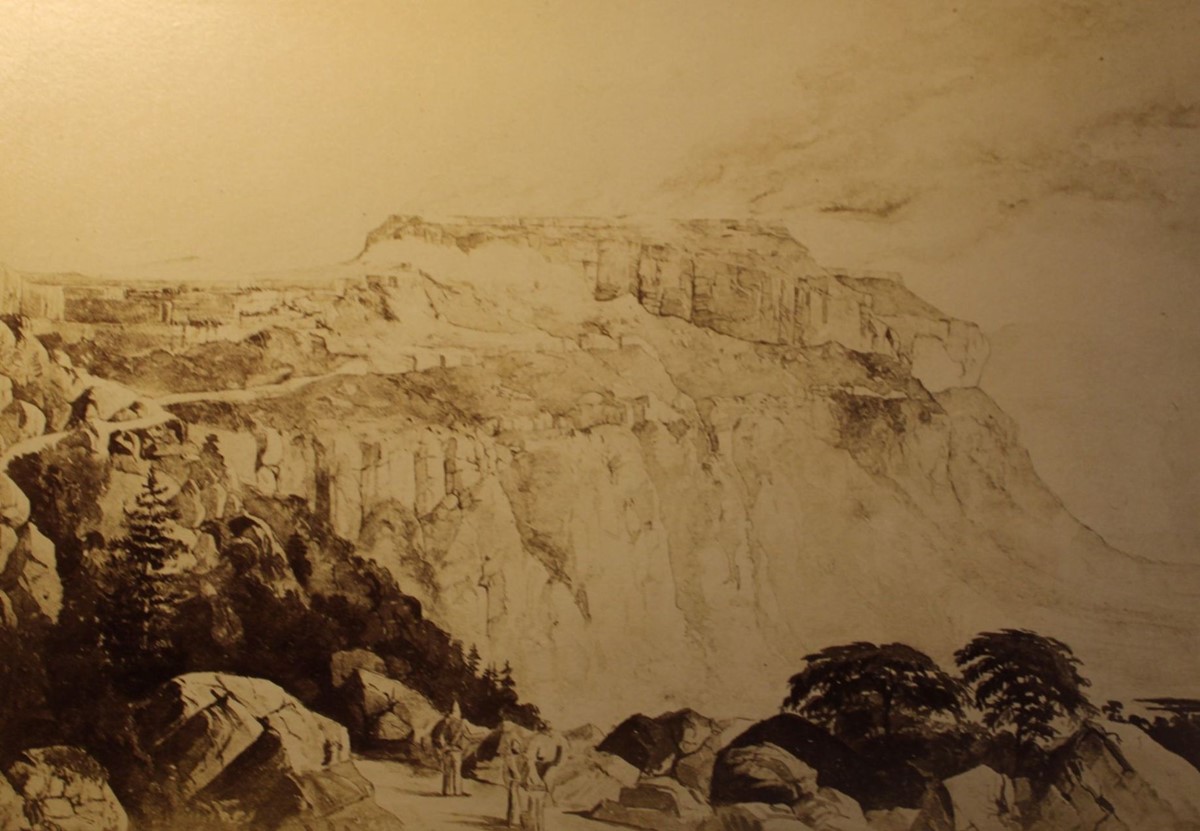
"It is calculated that Theodore [Tewodros] lost nearly 3000 men in this sortie from Magdala - we buried 370 of their dead and brought in 150 wounded." - Lt Borrett
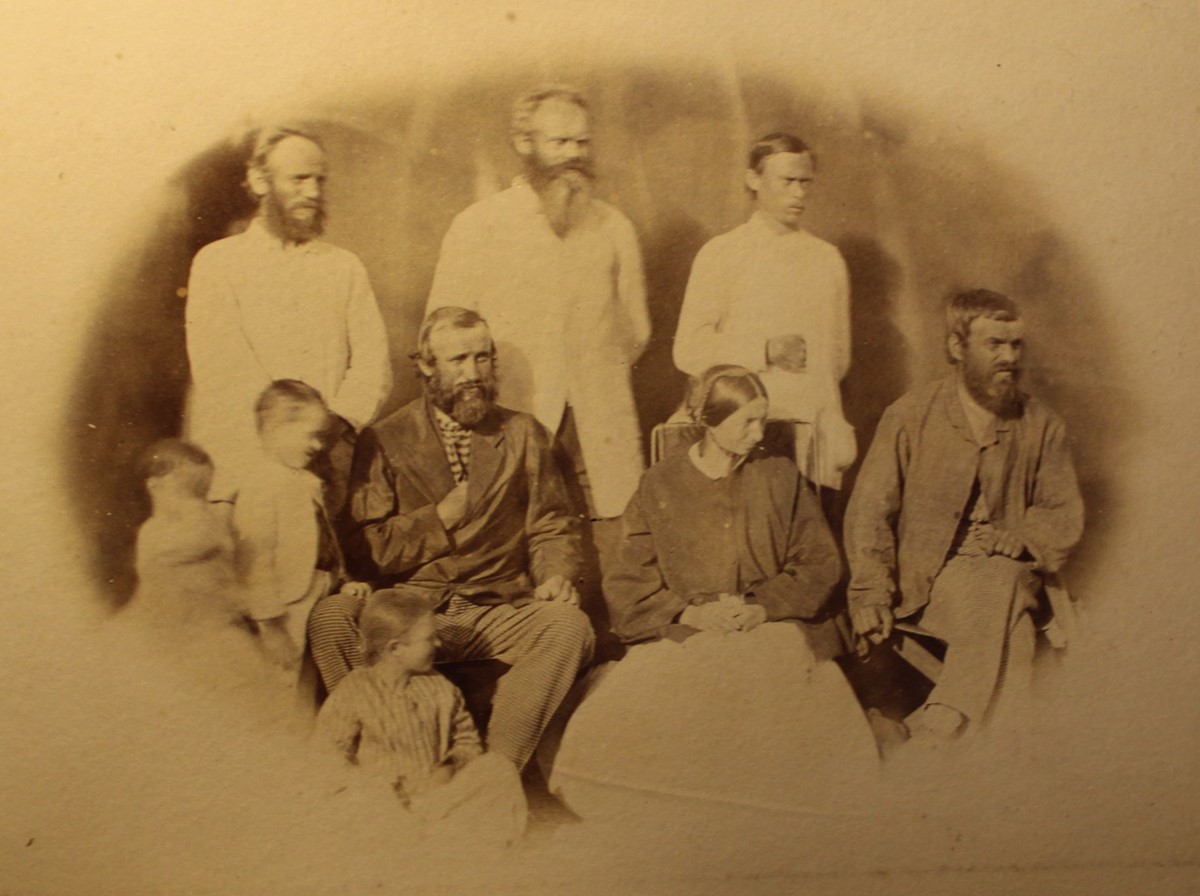
"At 8 O'Clock in the evening the whole of the Prisoners were sent to our Camp.. They told us Theodore's [Tewodros] army was completely routed and that Magdala [Maqdala] was full of wounded Abyssinias. They gave horrid accounts of Theodore's brutality, only two days before he murdered 150 Galla prisoners before their eyes." - Lt Borrett
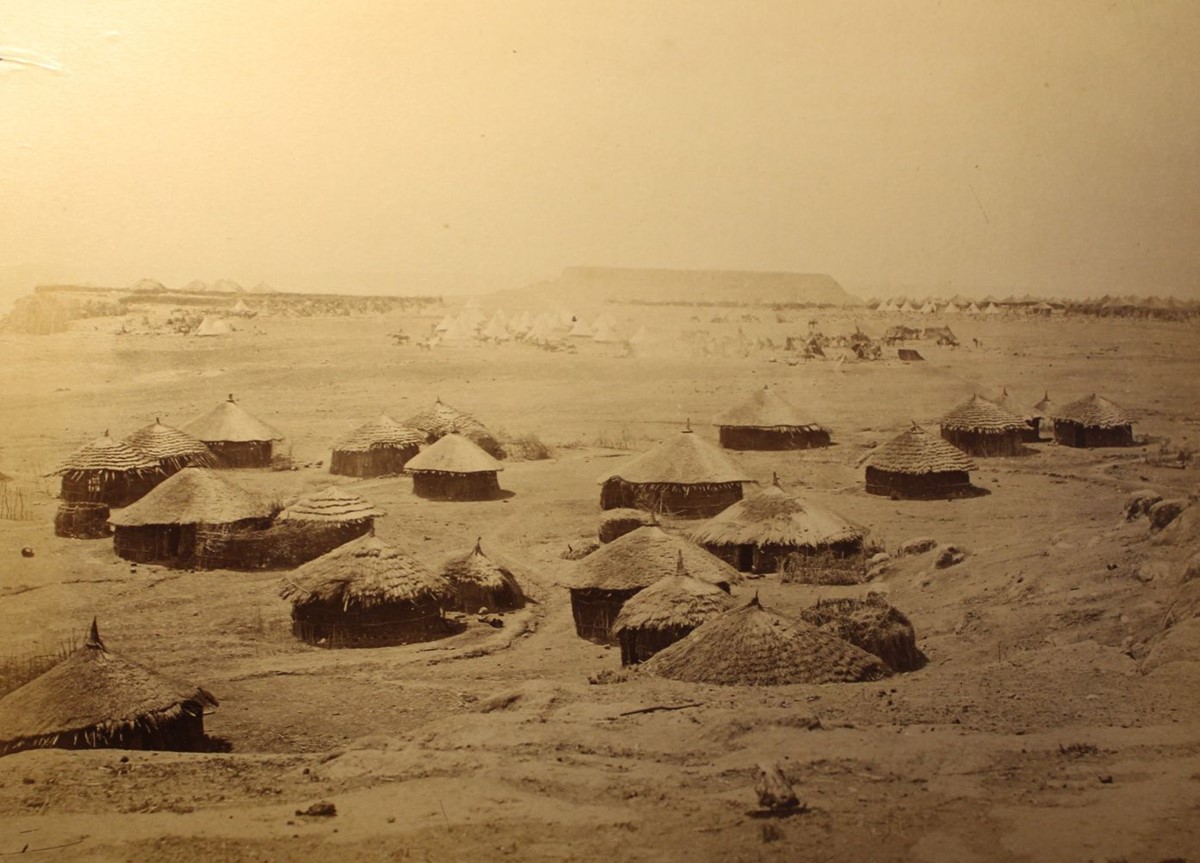
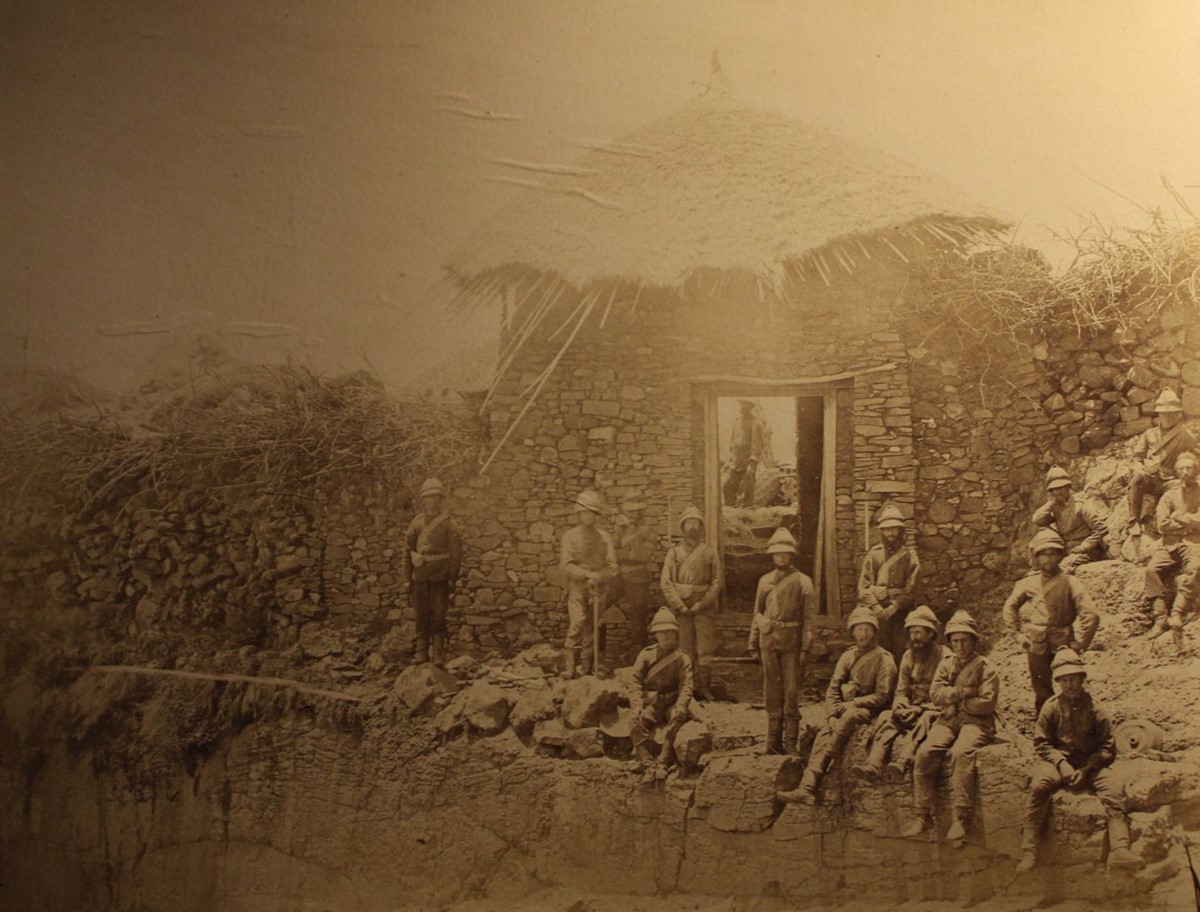
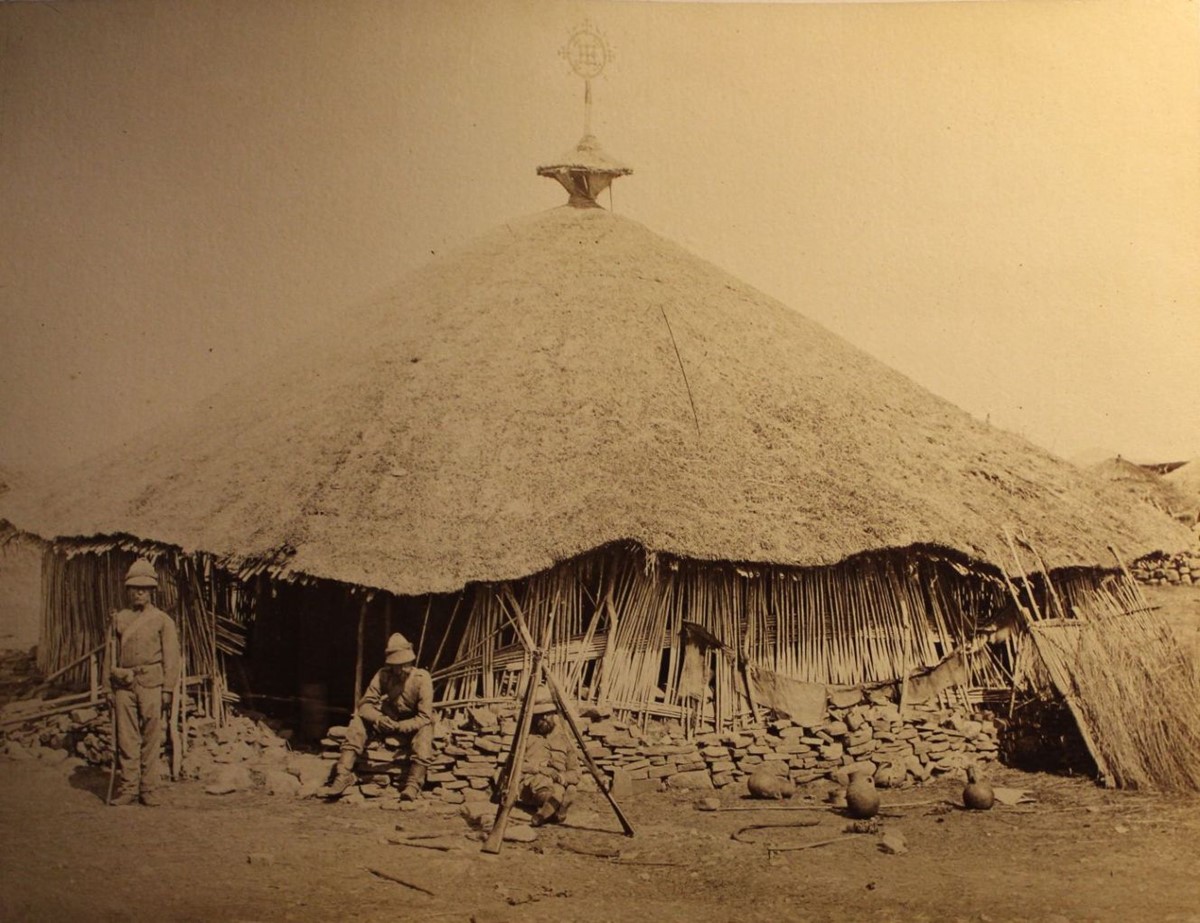
Officers of the Regiment
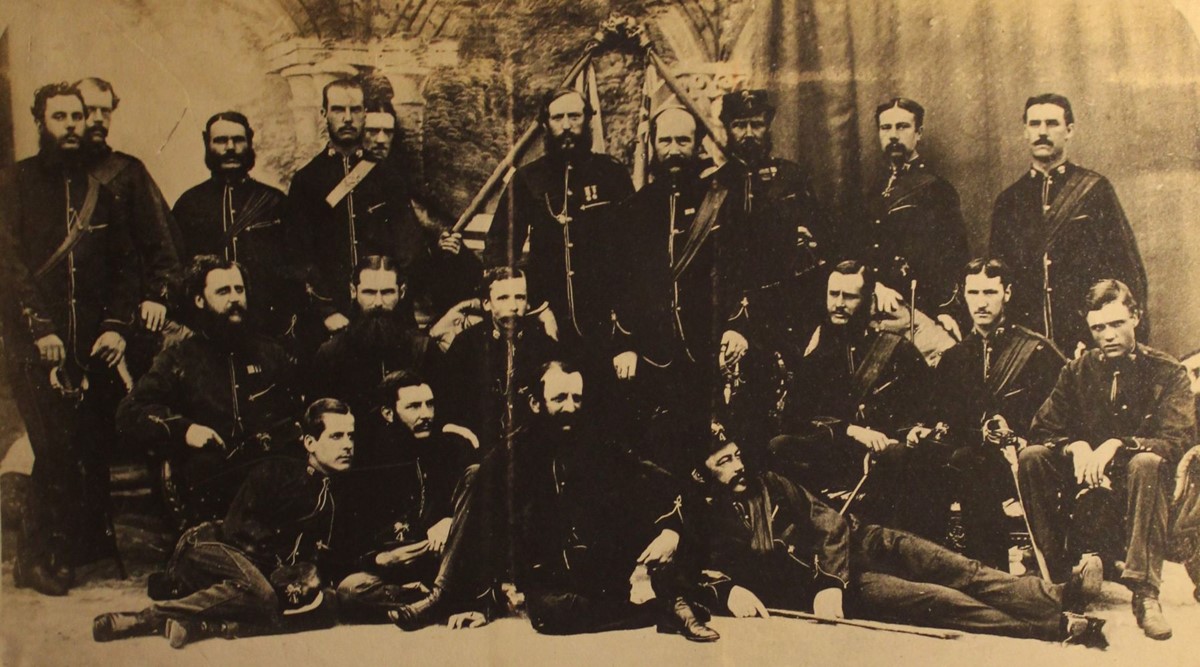
Although the lives of most enlisted men who served in the King’s Own were not well documented, we have more information on the officers who served on the Abyssinian Campaign. Most came from wealthy families, and their lives before, during and after their military service often spanned the British Empire and the world. These brief biographies are compiled from various sources within the museum’s collection, including letters published in the book ‘My Dear Annie: The Letters of Lieutenant Herbert Borrett: The King’s Own Royal Regiment. Written to His Wife, Annie, During the Abyssinian Campaign of 1868’, which is available for sale in the City Museum shop.
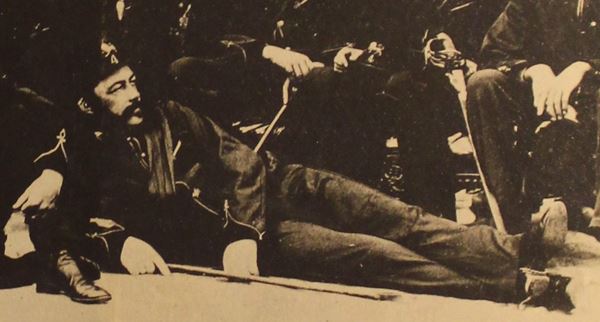
Charles Edward Honghton Billing (1839-1875)
Born in Dublin on 10 April 1839 and baptized in the same year at St Stephen’s Church, Charles Edward was the son of Theobald Billing, a solicitor, and Diana Ball. He spent his childhood in Dublin, residing at 41 Upper Mount Street, growing up alongside one brother and two sisters. When he reached the age of 18 Charles embarked on military service, enrolling as an Ensign in the 4th King’s Own Regiment on 15 March 1857 and serving, the year after, as a Lieutenant in the fight against the rebellion of the Indian Mutiny campaign (1857-1858). After six years of military experience, on 8 August 1864, Charles gained the rank of Captain and, in the same position, fought in Abyssinia.
The 1870s were marked by personal tragedies for Charles: his father died on 24 March 1873 at the age of 85, and his brother Theobald on 3 October of the same year. Charles himself left the service in 1874 and died the year after, aged only 36.
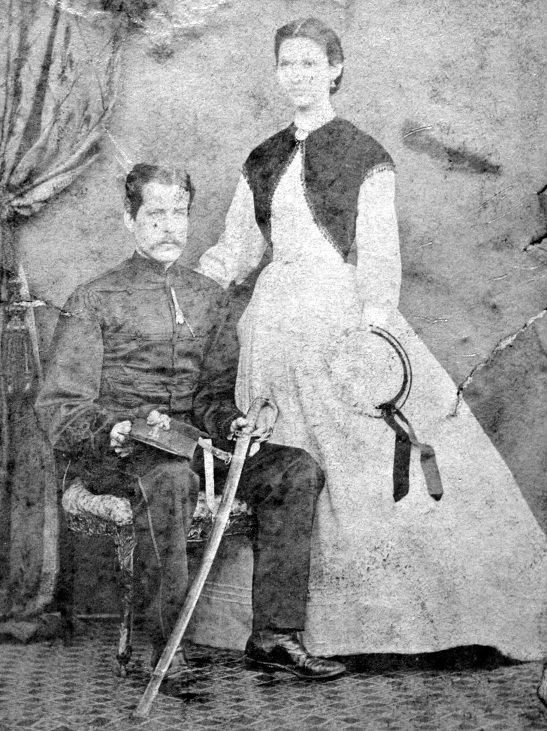
Herbert Charles Borrett
Borrett was born on 23 September 1841 at Saxmundham, Suffolk. The youngest son of the local squire, he enrolled as an Ensign in the King’s Own in 1858, eventually commanding the 1st Battalion in 1886-7. He became Assistant Adjutant General and later Inspector General of Recruiting at the War Office, then Major-General in 1899. He retired from the Army in 1903 and died in 1919.
In 1867 he married Charlotte Anne Bennett, daughter of Captain John Bennett of the 1st Bombay Fusiliers (pictured with him here).
His letters home to his wife form an important first hand account of the expedition. These are published in the book ‘My Dear Annie’, available in the museum shop.
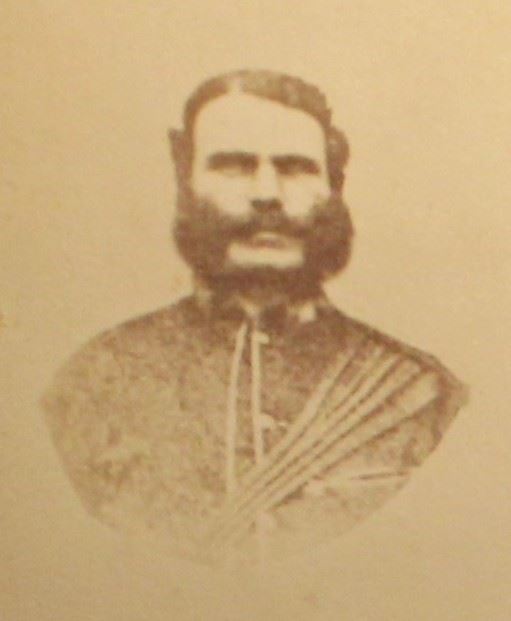
Thomas Burridge
Thomas Burridge entered the British Army as an Ensign on 5 November 1854. Within months, on 9 March 1855, he was promoted to Lieutenant from the rank of Quartermaster. During this early phase of his career, Burridge saw active service in the eastern campaign of 1854–1855, including operations in the Crimea and the Siege of Sevastopol. For his service, he was awarded the Crimea Medal with three clasps, as well as the Turkish Medal. He later rose to the rank of Captain on 7 May 1866.
Thomas took part in the British Expedition to Abyssinia. Shortly after the expedition’s victory, and only days after the death of Empress Tiruwork Wube, Burridge fell ill and spent several days in hospital. Upon returning to camp, he tragically took his own life. Described in Lieutenant Borrett’s letters as a man of notably gentle disposition, “good-tempered and excessively good-natured, never speaking unkindly of anyone behind his back”, who “proved himself – especially during the Abyssinian War”, his suicide reflected the ultimate and tragic effect of the psychological trauma that soldiers often experience in war. Thomas was buried the following evening at five o’clock, without military display or funeral honours. In a detail noted with sadness by his comrades, he was carried to his grave by dooly bearers rather than by members of his own company. A Court of Inquest returned a verdict of temporary insanity; however, some officers believed that alcohol may have been an underlying factor in his death.
John Thomas Carruthers (1845–1896)
John Thomas Carruthers was born on 17 July 1845 in Taganrog, Rostov, Russia, and was baptised at the British Chaplaincy in St Petersburg. Son of John Patrick Carruthers and Caroline Jane Frederika Lusitana Wiederhold, he belonged to a British expatriate family. John grew up in Russia alongside several siblings including Amelia Laura (born on 20 September 1846) and Ann Sophia Carruthers (born on 11 November 1848). A brother, William Henry Carruthers, was born in 1851, but the child died the following year in Grunau, Aleksandrovsk, Ekaterinoslav. Another brother, William Ernest Carruthers, was born in 1854 in Taganrog.
As a 19-year-old man, John began his military service as an Ensign on 2 February 1864. By 1869 he was fighting in the Indian Army. While serving in Bombay he was promoted to Lieutenant, then rose to the rank of Captain. He fought in Abyssinia. In 1878 John experienced the loss of his father, who died at the age of 76 in Taganrog. On 9 April 1879, John married Isabel Smith in Nuseerabad, Bombay, India. They had one child, John Harvey De Wiederhold, born on 2 October 1882.
By 1881, John was recorded living in St Peter Port, Guernsey. He died suddenly in Cheltenham at the age of only 51, on 21 December 1896, after a fall from a bicycle caused by syncope.
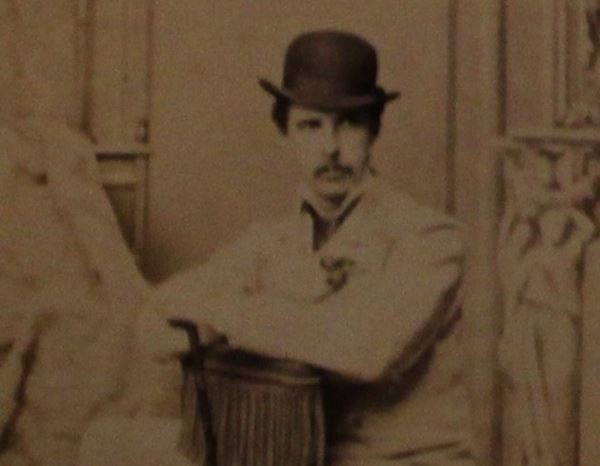
Christopher Middlemass Davidson (1843–1922)
Born in Haddington, Scotland, on 6 May 1843, Christopher Davidson was the son of Henry Marshall Davidson and Mary Middlemass. He joined the King’s Own Regiment as an Ensign in 1862 and was promoted to Lieutenant in 1866. Davidson served in the Abyssinian Campaign (1867–68). During the campaign he experienced the harsh conditions faced by many soldiers, falling ill and being treated at the camp at Senafe before returning to duty in March 1868. His service in Abyssinia contributed to his later promotion to Captain and transfer to the 104th Bengal Fusiliers in 1875, continuing a long military career in the British Empire.
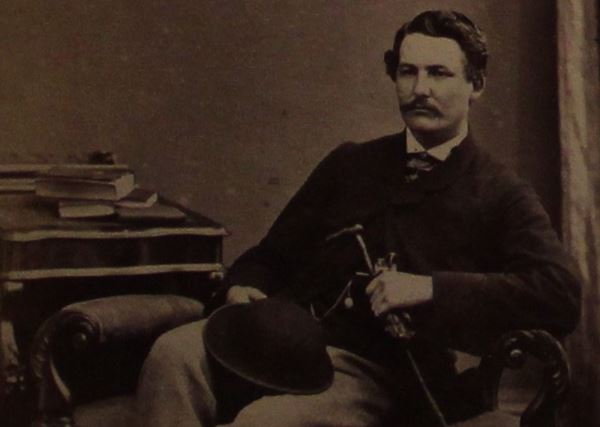
Christopher Rawes Durrant (1840–1920)
Born in Ipswich, Suffolk, on 23 September 1840, Christopher Rawes Durrant was the eldest son of Christopher Mercer Durrant and Susannah Sophia Rawes. He entered the British Army at just 17, receiving a commission as Ensign in 1857 and promotion to Lieutenant in 1859. Durrant served in the Abyssinian Campaign (1867–68). Like many young officers, he was part of the force that advanced inland from the Red Sea through demanding terrain toward the fortress of Magdala, where the campaign reached its decisive conclusion. He left the army in 1868 as Senior Subaltern and later became Rector of Freston, serving his parish for many years. He died in London in 1920, aged 80.
Edward Harrison (1845–1875)
Born in Dublin on 19 May 1845, Edward Harrison was the son of James Harrison and Ellen Margaret Baker. After his mother’s death in 1857, he emigrated with his family from Liverpool to Hobart, Tasmania, where he spent his formative years in colonial Australia. Harrison later pursued a military career in the British Army. Promoted to Captain in the 76th Regiment of Foot on 5 March 1867, he soon took part in the Abyssinian Campaign (1867–68). Following his service, Harrison settled in Victoria, Australia. He died prematurely in Sale in 1875, aged only 30, after a nighttime road accident involving his horse and a carriage.
John Beaufin Irving (1844–1925)
John Beaufin Irving was born on 14 February 1844 in Cheltenham, where he was baptised on 20 March. Son of John Beaufin Irving and Diana Charlotte Williamson, he grew up alongside several siblings, Henrietta, Paulus Aemilius, Diana Charlotte and Mary Lucy. At the age of six he experienced the loss of his mother, who died in December 1850. His father’s subsequent remarriage brought him half-siblings, Susannah Frances and Thomas Edmund.
John Beaufin began his military career at age 19, joining the King's Own Royal Regiment as an Ensign on 8 January 1864. He served in Abyssinia, and according to The Scotsman of 3 August 1935, he was reputed to have been the hero of a daring exploit in which he saved a manuscript of the Gospel from the bombardment of Magdala. Like many soldiers he also fell ill during the campaign. John was promoted to Lieutenant on 27 February 1869. He transferred to the Army Service Corps and became Honorary Colonel of the 3rd Battalion, Manchester Regiment, around 1880.
In 1865, at age 21, John married Sarah Agnes Corke, who gave birth to eight children over eleven years, including Ellen Beatrice, Agnes Diana, Rose Lilian, Ada Constance, May Lucy, John Beaufin Jr., Evelyn Isabella and Sir Robert Beaufin Irving. John experienced the deaths of several close family members, including his daughters Evelyn Isabella and May Lucy, his half-brother Thomas Edmund, and his full siblings Diana Charlotte, Mary Lucy, Henrietta and Paulus Aemilius. He inherited Bonshaw Tower in 1895, establishing his residence in Dumfriesshire, Scotland and remaining actively involved in the local culture and heritage, attending events like the 1915 Panama-Pacific International Exposition for a Clan Irving gathering in San Francisco. In 1906 he represented Wallace in the Edinburgh Pageant as the national hero of Scotland, being 6 feet 6 inches in height. He died on 8 April 1925 at the age of 81 at Bonshaw Tower and was buried in Annan on 11 April 1925.
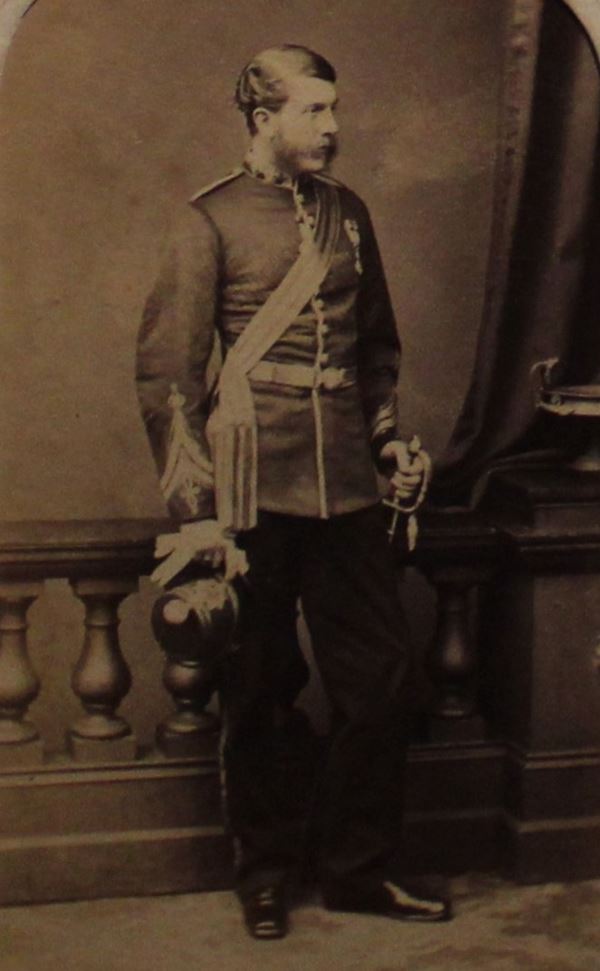
George Kittoe (1828–1876)
George Kittoe was born in 1828 in Downton, England, and was baptised there on 7 November 1828. As the son of William Hugh Edward Hamilton Kittoe and Martha Knight, George belonged to a professional family, his father being a medical doctor. His early years were spent in southern England.
In 1846, as an 18-year-old, George experienced the loss of his father, who died in Marylebone. Nine years later, he joined the army as an Ensign on 7 September 1855. He served and fought in Abyssinia, commanding a company which served as artillery escort. As many soldiers did, he became sick during the march. These details are recorded in the letters of Kittoe’s fellow officer, Lieutenant Herbert Borrett, who also describes Kittoe in scathing terms as “not a gentleman” and “not a good specimen of the King’s Own”, showing a difficult relationship between the two soldiers.*
On 19 January 1860, at the age of 32, George married Augusta Hart Shawe in Havant, and they had two daughters: Emeline Isabel Hart (born around 1865 in India) and Marian Ada Ed Shaw (born about 1866 in Kent). George experienced further family loss in 1867 when his mother died in Marylebone. By 1871, he was living with his family in Ealing, a growing suburban area of Middlesex. George died there on 14 January 1876 at the age of 48.
* “Your description of Mrs. Kittoes is most amusing and made me laugh heartily, is she not fearfully vulgar? By no means a good specimen of the King’s Own. It is true that we were on a short allowance of water at Aden, and that I have caught 23 rats in one night in a cage under my head, and once killed one on the dinner table; Mrs Kittoes’s other stories about Aden are preposterous, but I must say the heat there is far, far greater than in India. The story of the ship on fire was to use a mild expression, highly coloured. Do not repeat this, but I utterly detest Cpt. K.tt., he is not a gentleman and drops his “hs” about to a fearful extent. I wrote a parody on Campbell’s “Lochiel’s Warning” about Cpt. K. and his wife at Aden which nearly got me into a serious scrape, and I do not think Cpt. K. has ever forgotten it; this must not of course reach Mrs. Kittoes’s ears….” - from Borrett, “My Dear Annie: The Letters of Lieutenant Herbert Borrett: The King’s Own Royal Regiment. Written to His Wife, Annie, During the Abyssinian Campaign of 1868.”, p. 54.
Joseph Vavasour Lane (1836–1873)
Joseph Vavasour Lane was born on 31 August 1836 in Dublin. Son of Richard Crowther Lane and Jane, he grew up alongside the younger brother, Peter William Lane, born on 11 January 1839 in Harold’s Cross, Dublin. Joseph spent his early years in Dublin, experiencing the loss of his mother in November 1864 at Clonmel, Tipperary, when he was 28 years old.
Joseph became Assistant Surgeon on 18 February 1859 and served as a doctor in Abyssinia. During the campaign, he was described in the letters of Lieutenant Borrett as “kind and attentive” in tending Borrett during an illness; “doing all his power to make me comfortable”.
Joseph died at the young age of 36, on 4 April 1873 in Kensington. His probate was recorded on 8 October 1873 at the Principal Registry.
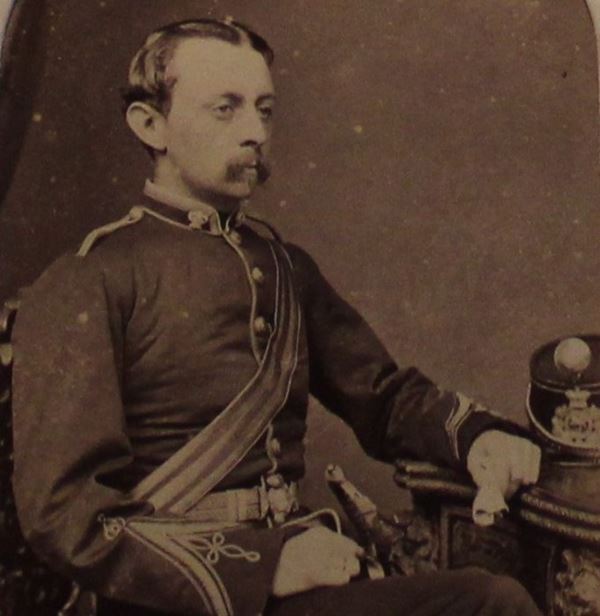
Edward John Lugard (1845–1911)
Born in Limerick on 2 January 1845, Edward Williamson Lugard was the son of Lieutenant-Colonel Henry Williamson Lugard and Margaret Anna MacHenry. His father died on active service in China in 1857, an event that may have influenced Edward’s decision to pursue a military career.
He joined the King’s Own Royal Regiment as an Ensign in 1863 and, as a Lieutenant, served in the Abyssinian Campaign (1867–68). For his service he received the Abyssinia Medal.
Lugard later rose through the ranks, serving in Egypt and India and eventually became a Brigadier-General in the British Army. He died in London in 1911.
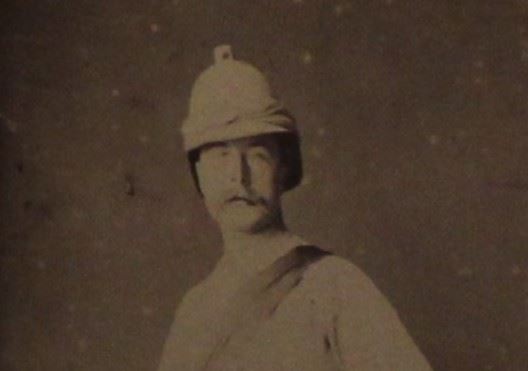
John Macleod
John Macleod was commissioned as an Ensign on 6 February 1863 and promoted to Lieutenant in 1867. He served in the British Expedition to Abyssinia. Like many other soldiers experiencing the hard atmospheric and supply conditions, Macleod became ill during the inland march and was admitted to hospital, together with about forty other men. He left the service in 1870, one year after the expedition.
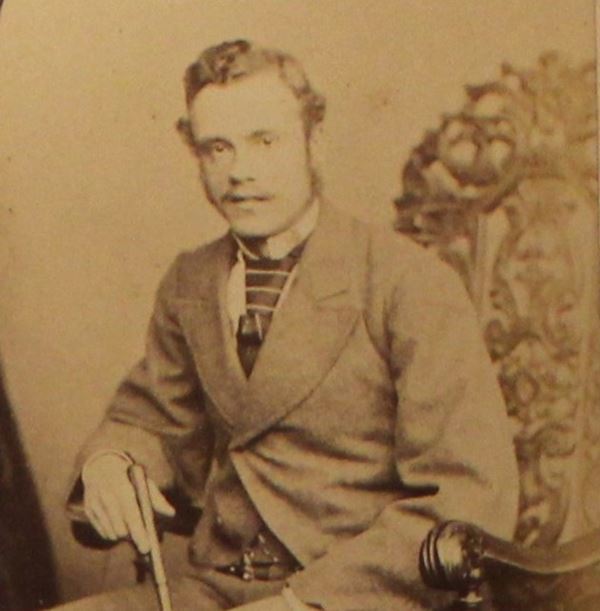
Robert Simpson
Robert Simpson was commissioned as an Ensign on 15 November 1861 and, after promotion to Lieutenant on 5 February 1866, participated in the Expedition to Abyssinia. The African campaign gave him the experience to rise in rank, achieving the role of Captain in 1874. In 1878 Robert was transferred to the Pay Department. After a few years in this administrative position he returned to active regimental duty, serving once more with his unit between 1881 and 1884. During these years, he was granted the honorary rank of Major in December 1883. Simpson also took part in the Mahdist War of 1881-99, including service in the Suakin Expedition (1884-85), gaining the campaign medal with the clasp “Suakin”, as well as the Khedive’s Star.
Simpson retired from the army in 1887 with the rank of Lieutenant-Colonel. He spent his later years in London, where he died on 2 March 1908 at the age of 66.
George Augustus Sweny (1837–1918)
George Augustus Sweny was a career officer whose service in the Abyssinian Campaign defined his military reputation. Commissioned as an Ensign in 1858 and promoted to Lieutenant in 1862, he served as Aide-de-Camp to General Wilby during the expedition. At the Battle of Arogie, Sweny acted as Baggage-Master, organizing and securing vital supplies under threat as enemy forces advanced through the ravine. Promoted to unattached Captain in 1867, he later served with the 7th Fusiliers. His subsequent life spanned England and Canada.
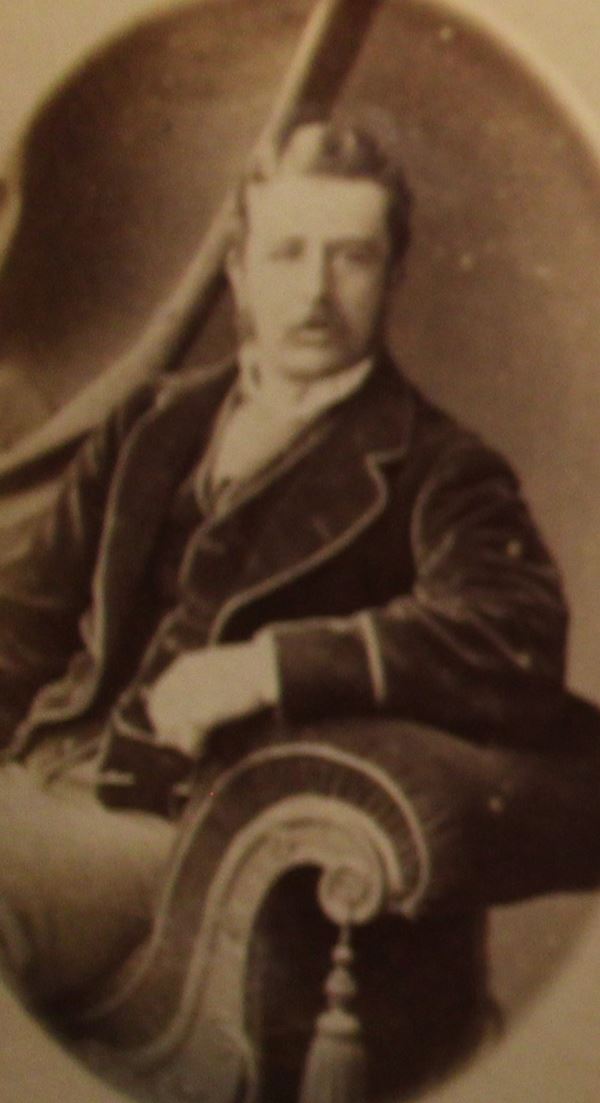
Frederick Cooper Turner (1843–1921)
Frederick Cooper Turner was born on 21 June 1843 in Exeter, Devon, as the son of John Fisher Lester Turner and Emily Arthur. Baptised on 2 August 1843 at St Mary Major, he was raised between Exeter and the vicarage at Winkleigh, alongside several brothers and sisters, including Mary Katherine, Margaret Isabella and Montagu Cornish Fisher. His brother Arthur died in India in 1864. Before joining the Regiment, he served as a Midshipman in the Indian Navy from 1858 to 1863. He was present at the assault on Fort Beyt and served with the Naval Brigade in the Okamundel Field Force at the capture of Dwarka in 1859. He later took part in the China Campaign, including the capture of the Taku Forts in 1860.
After these early years in the navy, Frederick joined the Regiment as an Ensign, serving in the Abyssinia campaign. His experience helped him rise to Lieutenant in 1870 and Captain in 1878. In June 1883 he became a Major, and later Lieutenant-Colonel. As his career developed, so did his personal life: by 1871 he was living in Aldershot and later for periods in Surrey and Devon, including residences in Kingston-upon-Thames and Surbiton. At the age of 38, Frederick married Emma Storey on 17 August 1881 in Surbiton.
Frederick suffered several personal losses during his lifetime, including the death of his father in 1871 and his wife, who died on 6 June 1910 in Galgate, Lancashire, after 28 years of marriage. The following year he settled in Ellel, Lancashire. On 5 December 1912, at the age of 69, Frederick married Grace Samuel in Hove. Even in old age, he remained militarily active, being recorded as late as 1917 during the First World War, at the age of 74. He died on 25 June 1921 at Westcroft, Kingston Hill, in Kingston upon Thames, Surrey, just four days after his 78th birthday, and was buried locally in Kingston.
Augustus Charles Twentyman (1836–1913)
Born in London on 27 April 1836, Augustus Charles Twentyman was the eldest son of William Holme Twentyman and Lelian Twentyman. Commissioned as an Ensign in the British Army in 1855, he rose to Lieutenant in 1858 and Captain by 1863. Twentyman served during the Abyssinian Campaign (1867–68), as a key figure for the logistic success. Indeed, rather than marching with the fighting columns, Twentyman was stationed at the Red Sea port of Zoulla as part of the Land Transport Train. This unit organised the movement of thousands of mules and camels that carried food, ammunition and equipment from the coast across difficult mountain routes to the advancing army. Indeed, the expedition’s success depended heavily on this vast logistical network. The static role was frustrating for Twentyman, who regretted missing the combat alongside his regiment. His experience highlights the importance and sacrifice of the logistical systems that made the campaign possible.
Beaufort Henry Vidal (1842–1908)
Born in Chatham, Kent, on 16 May 1842, Beaufort Henry Vidal was the son of Vice Admiral Alexander Thomas Emeric Vidal of the Royal Navy and Sarah Antoinette Veitch. He grew up within a strong naval and military tradition, though his early life was marked by loss: his mother died when he was just 1 year old, and in 1863 he lost both his father and his brother. In the same year, Vidal began his military career, receiving a commission as Ensign on 23 May 1863 and becoming a Lieutenant in the Second West India Regiment the following year. At the age of 26 he took part in the Abyssinian Campaign (1867–68). After leaving the British Army in 1870, Vidal settled in Canada. He later continued his military career with the Royal Canadian Regiment, serving from 1883 to 1899 and eventually retiring with the rank of Brigadier General. He died in Ottawa, Ontario, on 2 March 1908, aged 65.
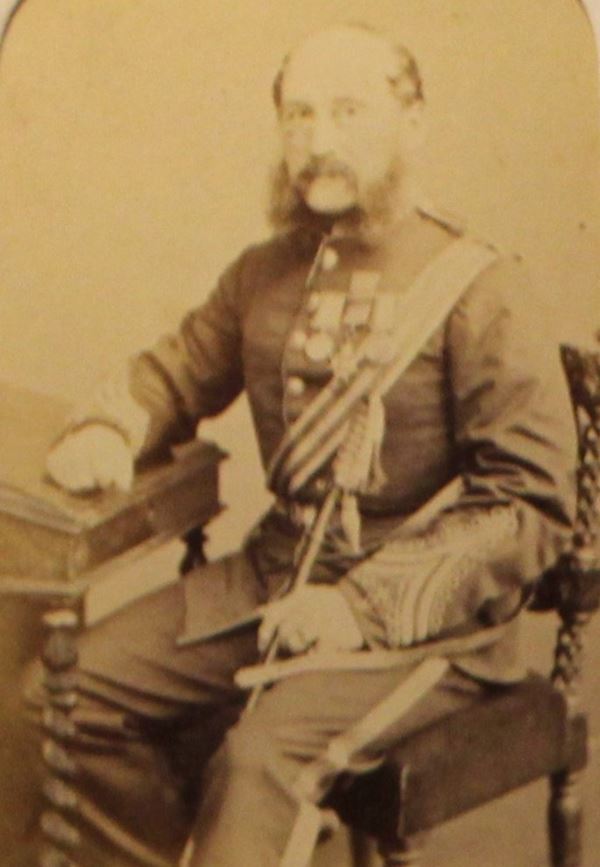
William Wilby
William Wilby began his military career at a remarkably young age, entering the British Army as an Ensign on 27 May 1836, at just 16 years old. In the same year, on 14 November, he embarked for Australia aboard the Francis Charlotte. He then rose through the ranks, being promoted to Lieutenant in 1837, Captain in 1847, Major in 1855 and Lieutenant-Colonel in 1859. He served in the Crimean War, where he earned an appointment as a Companion of the Order of the Bath, a notable recognition of distinguished service. During the Indian Rebellion of 1857, Wilby played a key operational role, commanding the right wing of his regiment in the regions of Gujrat and Sindh.
After these years of valuable experience, William participated in the British Expedition to Abyssinia (1867-68). On 13 December, he was appointed Brigadier within the Abyssinian field force. Following the capture of Magdala, he was entrusted with command of the fortress, serving as its commandant until it was ultimately destroyed. His experience and service had been recognized in 1864 as he was granted the brevet rank of Colonel. Wilby retired from service in 1873 but the long commitment to the army continued to be acknowledged: in 1892 he was appointed Colonel of his regiment and promoted to honorary Lieutenant-General. William died in London on 15 December 1893 after an attack of influenza. At the time of his death, he was receiving a Distinguished Service pension of £100 per annum.
The King's Own history website also has many campaign photos, along with maps of the march to Magdala, objects, stories and more. Visit the Abyssinia section on the 19th Century page to explore further.
The links below will take you to the websites of some other museums and libraries in the UK which house items from Ethiopia, including those relating to the Abyssinia campaign of 1868. Ongoing research and cataloguing efforts continue to uncover more of these objects and their stories. Find out more in this article from The Standard: Cultural Treasures from Ethiopia found in London.
Museums
British Museum (London): Maqdala Collection - The British Museum has a significant collection of Ethiopian artifacts, including items from the Maqdala collection. This collection includes ceremonial crosses, chalices, processional umbrella tops, weapons, textiles, jewelry, and sacred altar tablets known as tabots.
Victoria and Albert Museum (London) - The V&A Museum holds various Ethiopian artifacts, including a crown and royal wedding dress.
The National Army Museum (London) - This collection includes many items from Ethiopia, and the museum's website explores the history of the 1868 campaign as well as recent stories of repatriation:
Wellcome Collection (London) - This collection includes Ethiopian manuscripts and other historical items.
Westminster Abbey (London) - The abbey's collection of holy relics includes a number of tabots from Ethiopia.
Libraries
British Library (London) - The British Library has a collection of Ethiopian manuscripts and historical documents.
Bodleian Library (Oxford) - This library holds a variety of Ethiopian manuscripts and rare books.

Lancaster City Museums and the Trustees of the King's Own Royal Regiment Museum are grateful to the The Esmée Fairbairn Collections Fund for making this project possible. The Fund is run by the Museums Association, funding projects that develop collections to achieve social impact. Since its launch in 2011, it has awarded 162 projects with grants totaling over £11 million.
Find out more here: Esmée Fairbairn Collections Fund.

